Factors Associated with the Recurrence of a Surgically Evacuated Intracranial Chronic Subdural Hematoma using Burr-hole Irrigation: A Cross-sectional Retrospective Single-center Study
DOI:
https://doi.org/10.54133/ajms.v11i1.3182الكلمات المفتاحية:
Burr-hole evacuation، Chronic subdural hematoma، Head trauma ، Recurrent hematomaالملخص
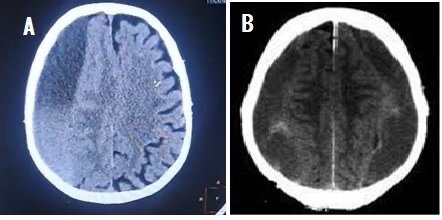
Background: Chronic subdural hematoma (CSDH) is a common neurosurgical entity characterized by the accumulation of blood in the subdural space. Despite proper surgical management, recurrence of CSDH remains a clinically relevant problem that may necessitate reoperation and prolong morbidity. Objective: To evaluate the factors affecting the recurrence of chronic subdural hematoma after surgical evacuation. Methods: A retrospective cross-sectional study of 50 patients with CSDH evaluated at the emergency room of Neurosurgical Teaching Hospital from October 2024 through September 2025. All the patients were fully examined, managed, and discharged home after 7 days of surgical treatment and followed up for 3 months. Results: The study included 50 patients; 44 (88%) were male, and 6 (12%) were female. Age ranged from 23 to 87 years, with a mean of 69.55±18.4 years for both genders, peaking in the seventh decade. CSDH was on the right side in 30%, the left side in 44%, and bilateral in 26% (13 patients). The mean thickness was 2.4±0.46 cm, ranging from 0.8 to 3.4 cm. Among the 50 patients, 28 had brain atrophy on the CT scan. Recurrence occurred in 10 patients (20% of cases). Conclusions: Factors affecting hematoma recurrence include patient factors (age, bleeding profile, associated diseases, and antiplatelet medications) and radiological factors (hematoma location and thickness, midline shift, and presence of a visible membrane on brain CT).
التنزيلات
المراجع
Clarke C, Adams M, Howard R, Rossor M, Shorvon S, Warren J, (Editors), The language of neurology: symptoms, signs and basic investigations. Neurology: a queen square textbook. 2016 Aug 10:97-131. doi: 10.1002/9781118486160.ch4. DOI: https://doi.org/10.1002/9781118486160.ch4
De Carvalho D, Almenawer S, Lozej M, Noble H, Murty NK. Spontaneous chronic subdural hematoma in a 22-year-old healthy woman. World Neurosurg. 2013;80(5):654-659. doi: 10.1016/j.wneu.2012.11.065. DOI: https://doi.org/10.1016/j.wneu.2012.11.065
Jeong SI, Kim SO, Won YS, Kwon YJ, Choi CS. Clinical analysis of risk factors for recurrence in patients with chronic subdural hematoma undergoing Burr Hole Trephination. Korean J Neurotrauma. 2014;10(1):15-21. doi: 10.13004/kjnt.2014.10.1.15. DOI: https://doi.org/10.13004/kjnt.2014.10.1.15
Kanyi JK, Ogada TV, Oloo MJ, Parker RK. Burr-hole craniostomy for chronic subdural hematomas by general surgeons in rural Kenya. World J Surg. 2018;42(1):40-45. doi: 10.1007/s00268-017-4143-z. DOI: https://doi.org/10.1007/s00268-017-4143-z
Kolias AG, Chari A, Santarius T, Hutchinson PJ. Chronic subdural haematoma: modern management and emerging therapies. Nat Rev Neurol. 2014;10(10):570-578. doi: 10.1038/nrneurol.2014.163. DOI: https://doi.org/10.1038/nrneurol.2014.163
Ducruet AF, Grobelny BT, Zacharia BE, Hickman ZL, DeRosa PL, Anderson K, et al. The surgical management of chronic subdural hematoma. Neurosurg Rev. 2012;35(2):155-169. doi: 10.1007/s10143-011-0349-y. DOI: https://doi.org/10.1007/s10143-011-0349-y
Májovský M, Masopust V, Netuka D, Beneš V. Flexible endoscope-assisted evacuation of chronic subdural hematomas. Acta Neurochirurgica. 2016;158(10):1987-1992. doi: 10.1007/s00701-016-2902-5. DOI: https://doi.org/10.1007/s00701-016-2902-5
Mehta V, Harward SC, Sankey EW, Nayar G, Codd PJ. Evidence based diagnosis and management of chronic subdural hematoma: a review of the literature. J Clin Neurosci. 2018;50:7-15. doi: 10.1016/j.jocn.2018.01.050. DOI: https://doi.org/10.1016/j.jocn.2018.01.050
Yang W, Huang J. Chronic subdural hematoma: epidemiology and natural history. Neurosurg Clinic. 2017;28(2):205-210. doi: 10.1016/j.nec.2016.11.002. DOI: https://doi.org/10.1016/j.nec.2016.11.002
Nouri A, Gondar R, Schaller K, Meling T. Chronic subdural hematoma (cSDH): A review of the current state of the art. Brain Spine. 2021;1:100300. doi: 10.1016/j.bas.2021.100300. DOI: https://doi.org/10.1016/j.bas.2021.100300
Ohba S, Kinoshita Y, Nakagawa T, Murakami H. The risk factors for recurrence of chronic subdural hematoma. Neurosurg Rev. 2013;36(1):145-150. doi: 10.1007/s10143-012-0396-z. DOI: https://doi.org/10.1007/s10143-012-0396-z
Okano A, Oya S, Fujisawa N, Tsuchiya T, Indo M, Nakamura T, et al. Analysis of risk factors for chronic subdural haematoma recurrence after burr hole surgery: optimal management of patients on antiplatelet therapy. Br J Neurosurg. 2014;28(2):204-208. doi: 10.3109/02688697.2013.829563. DOI: https://doi.org/10.3109/02688697.2013.829563
Regan JM, Worley E, Shelburne C, Pullarkat R, Watson JC. Burr hole washout versus craniotomy for chronic subdural hematoma: patient outcome and cost analysis. PLoS One. 2015;10(1):e0115085. doi: 10.1371/journal.pone.0115085. DOI: https://doi.org/10.1371/journal.pone.0115085
Soleman J, Taussky P, Fandino J, Muroi C. Evidence-Based Treatment of Chronic Subdural Hematoma [Internet]. In: Traumatic Brain Injury. InTech; 2014. doi: 10.5772/57336 DOI: https://doi.org/10.5772/57336
Sousa EB, Brandão LF, Tavares CB, Borges IB, Neto NG, Kessler IM. Epidemiological characteristics of 778 patients who underwent surgical drainage of chronic subdural hematomas in Brasília, Brazil. BMC Surg. 2013;13(1):1-7. doi: 10.1186/1471-2482-13-5. DOI: https://doi.org/10.1186/1471-2482-13-5
Thotakura AK, Marabathina NR. The role of medical treatment in chronic subdural hematoma. Asian J Neurosurg. 2018;13(4):976. doi: 10.4103/ajns.AJNS_13_17. DOI: https://doi.org/10.4103/ajns.AJNS_13_17
Tiwari A, Dmytriw AA, Bo R, Farkas N, Ye P, Gordon DS, et al. Recurrence and coniglobus volumetric resolution of subacute and chronic subdural hematoma post-middle meningeal artery embolization. Diagnostics. 2021;11(2):257. doi: 10.3390/diagnostics11020257. DOI: https://doi.org/10.3390/diagnostics11020257
Wang Y, Wang C, Liu Y. Chronic subdural haematoma evolving from traumatic subdural hydroma. Brain Injury. 2015;29(4):462-465. doi: 10.3109/02699052.2014.990513. DOI: https://doi.org/10.3109/02699052.2014.990513
Wittschieber D, Karger B, Pfeiffer H, Hahnemann ML. Understanding subdural collections in pediatric abusive head trauma. Am J Neuroradiol. 2019;40(3):388-395. doi: 10.3174/ajnr.A5855. DOI: https://doi.org/10.3174/ajnr.A5855
Yadav YR, Parihar V, Namdev H, Bajaj J. Chronic subdural hematoma. Asian J Neurosurg. 2016;11(4):330. doi: 10.4103/1793-5482.145102. DOI: https://doi.org/10.4103/1793-5482.145102
Yogi N, Nepal PR, Gongal DN, Devkota UP. Analysis of risk factors predicting recurrence of chronic subdural hematoma. Nepal J Neurosci. 2018;15(3):32-38. doi: 10.3126/njn.v15i3.23279. DOI: https://doi.org/10.3126/njn.v15i3.23279
التنزيلات
منشور
كيفية الاقتباس
إصدار
القسم
الرخصة
الحقوق الفكرية (c) 2026 Al-Rafidain Journal of Medical Sciences

هذا العمل مرخص بموجب Creative Commons Attribution-NonCommercial-ShareAlike 4.0 International License.
Published by Al-Rafidain University College. This is an open access journal issued under the CC BY-NC-SA 4.0 license (https://creativecommons.org/licenses/by-nc-sa/4.0/).