Insights Into the Molecular Mechanisms and Use of Cancer Dormancy and Reawakening
DOI:
https://doi.org/10.54133/ajms.v11i1.2941الكلمات المفتاحية:
Dormancy، Cancer relapse، Biomarkers ، Reawakening ، Exiting dormancyالملخص
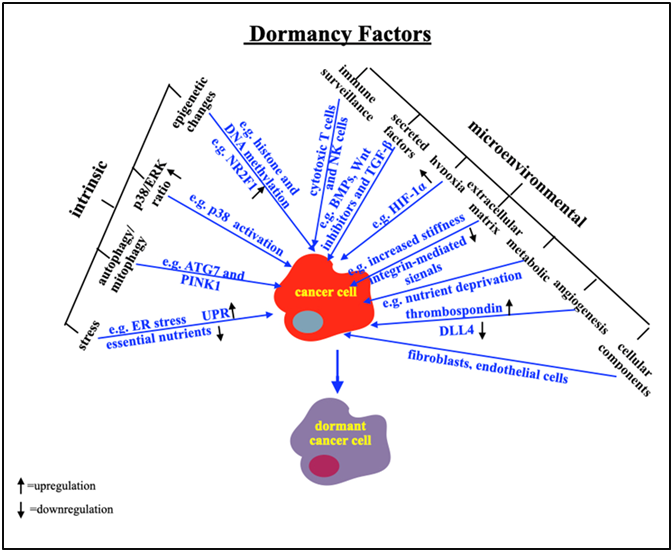
The ability of disseminated cancer cells from primary tumors to persist in a quiescent state for extended periods of years or even decades is a phenomenon known as cancer dormancy. This non-proliferative state represents a critical clinical challenge and constitutes a major barrier to therapy. Dormancy is often followed by stochastic relapses, or "reawakening," leading to metastasis of the primary cancer after its successful treatment. This narrative review synthesizes our current understanding of the complex and dynamic molecular mechanisms that govern dormancy and the eventual outgrowth of dormant cancer cells. We explore both cell-intrinsic factors and the microenvironmental determinants of establishing and maintaining dormant cancer cells. Crucially, this review translates these mechanistic insights into therapeutic strategies, highlighting the latest advances in targeting dormant cancer cells, preventing their reawakening, and the challenges of developing useful predictive biomarkers. By integrating our knowledge of the molecular underpinnings of dormancy, we aim to provide a roadmap for therapeutic interventions that can lead to a permanent state of cancer suppression.
التنزيلات
المراجع
Yeh AC, Ramaswamy S. Mechanisms of cancer cell dormancy—Another hallmark of cancer? Cancer Res. 2015;75(23):5014–5022. doi: 10.1158/0008-5472.can-15-1370. DOI: https://doi.org/10.1158/0008-5472.CAN-15-1370
Truskowski K, Amend SR, Pienta KJ. Dormant cancer cells: programmed quiescence, senescence, or both? Cancer Metastasis Rev. 2023;42(1):37–47. doi: 10.1007/s10555-022-10073-z. DOI: https://doi.org/10.1007/s10555-022-10073-z
Tufail M, Jiang CH, Li N. Tumor dormancy and relapse: understanding the molecular mechanisms of cancer recurrence. Mil Med Res. 2025;12(1). doi: 10.1186/s40779-025-00595-2. DOI: https://doi.org/10.1186/s40779-025-00595-2
Fidler IJ. The biology of cancer metastasis. Semin Cancer Biol. 2011;21(2):71–71. doi: 10.1016/j.semcancer.2010.12.004. DOI: https://doi.org/10.1016/j.semcancer.2010.12.004
Friberg S, Nystrom A. Cancer metastases: Early dissemination and late recurrences. Cancer Growth Metastasis. 2015;8:CGM.S31244. doi: 10.4137/cgm.s31244. DOI: https://doi.org/10.4137/CGM.S31244
Liu R, Zhao Y, Su S, Kwabil A, Njoku PC, Yu H, et al. Unveiling cancer dormancy: Intrinsic mechanisms and extrinsic forces. Cancer Lett. 2024;591:216899. doi: 10.1016/j.canlet.2024.216899 DOI: https://doi.org/10.1016/j.canlet.2024.216899
Aouad P, Quinn HM, Berger A, Brisken C. Tumor dormancy: EMT beyond invasion and metastasis. Genesis. 2023;62(1). doi: 10.1002/dvg.23552. DOI: https://doi.org/10.1002/dvg.23552
Brown JA, Yonekubo Y, Hanson N, Sastre-Perona A, Basin A, Rytlewski JA, et al. TGF-β-Induced quiescence mediates chemoresistance of tumor-propagating cells in squamous cell carcinoma. Cell Stem Cell. 2017;21(5):650-664.e8. doi: 10.1016/j.stem.2017.10.001. DOI: https://doi.org/10.1016/j.stem.2017.10.001
Gonzalez H, Robles I, Werb Z. Innate and acquired immune surveillance in the post dissemination phase of metastasis. FEBS J. 2017;285(4):654–664. doi: 10.1111/febs.14325. DOI: https://doi.org/10.1111/febs.14325
Vera-Ramirez L, Vodnala SK, Nini R, Hunter KW, Green JE. Autophagy promotes the survival of dormant breast cancer cells and metastatic tumour recurrence. Nat Commun. 2018;9(1). doi: 10.1038/s41467-018-04070-6. DOI: https://doi.org/10.1038/s41467-018-04070-6
Basu S, Dong Y, Kumar R, Jeter C, Tang DG. Slow-cycling (dormant) cancer cells in therapy resistance, cancer relapse and metastasis. Semin Cancer Biol. 2022;78:90–103. doi: 10.1016/j.semcancer.2021.04.021. DOI: https://doi.org/10.1016/j.semcancer.2021.04.021
Rosano D, Sofyali E, Dhiman H, Ghirardi C, Ivanoiu D, Heide T, et al. Long-term multimodal recording reveals epigenetic adaptation routes in dormant breast cancer cells. Cancer Discov. 2024;14(5):866–889. doi: 10.1158/2159-8290.cd-23-1161. DOI: https://doi.org/10.1158/2159-8290.CD-23-1161
Damen MPF, van Rheenen J, Scheele CLGJ. Targeting dormant tumor cells to prevent cancer recurrence. FEBS J. 2020;288(21):6286–6303. doi: 10.1111/febs.15626. DOI: https://doi.org/10.1111/febs.15626
Cho J. Understanding tumor dormancy: From experimental models to mechanisms and therapeutic strategies. Biomol Ther (Seoul). 2025;33(5):770-784. doi: 10.4062/biomolther.2025.056. DOI: https://doi.org/10.4062/biomolther.2025.056
Osisami M, Keller E. Mechanisms of Metastatic Tumor Dormancy. J Clin Med. 2013;2(3):136–50. doi:10.3390/jcm2030136 DOI: https://doi.org/10.3390/jcm2030136
Tamamouna V, Pavlou E, Neophytou CM, Papageorgis P, Costeas P. Regulation of metastatic tumor dormancy and emerging opportunities for therapeutic intervention. Int J Mol Sci. 2022;23(22):13931. doi: 10.3390/ijms232213931. DOI: https://doi.org/10.3390/ijms232213931
Prager BC, Bhargava S, Mahadev V, Hubert CG, Rich JN. Glioblastoma stem cells: Driving resilience through chaos. Trends Cancer. 2020;6(3):223–235. doi: 10.1016/j.trecan.2020.01.009. DOI: https://doi.org/10.1016/j.trecan.2020.01.009
Shepherd TG, Dick FA. Principles of dormancy evident in high-grade serous ovarian cancer. Cell Div. 2022;17(1). doi: 10.1186/s13008-022-00079-y. DOI: https://doi.org/10.1186/s13008-022-00079-y
Gimbrone MA, Leapman SB, Cotran RS, Folkman J. Tumor dormancy in vivo by prevention of neovascularization. J Exp Med. 1972;136(2):261–276. doi: 10.1084/jem.136.2.261. DOI: https://doi.org/10.1084/jem.136.2.261
Endo H, Inoue M. Dormancy in cancer. Cancer Sci. 2019;110(2):474–480. doi: 10.1111/cas.13917. DOI: https://doi.org/10.1111/cas.13917
Sosa MS, Bragado P, Aguirre-Ghiso JA. Mechanisms of disseminated cancer cell dormancy: an awakening field. Nat Rev Cancer. 2014;14(9):611–622. doi: 10.1038/nrc3793. DOI: https://doi.org/10.1038/nrc3793
Fu H. Editorial: Novel molecular mechanisms and clinical strategies in solid tumor recurrence and metastasis: from bench to bedside. Front Med (Lausanne). 2024;11. doi: 10.3389/fmed.2024.1364666. DOI: https://doi.org/10.3389/fmed.2024.1364666
Chakraborty G, Gupta K, Kyprianou N. Epigenetic mechanisms underlying subtype heterogeneity and tumor recurrence in prostate cancer. Nat Commun. 2023;14(1). doi: 10.1038/s41467-023-36253-1. DOI: https://doi.org/10.1038/s41467-023-36253-1
Payne KK. Cellular stress responses and metabolic reprogramming in cancer progression and dormancy. Semin Cancer Biol. 2022;78:45–48. doi: 10.1016/j.semcancer.2021.06.004.
Kudaravalli S, den Hollander P, Mani SA. Role of p38 MAP kinase in cancer stem cells and metastasis. Oncogene. 2022;41(23):3177–3185. doi: 10.1038/s41388-022-02329-3. DOI: https://doi.org/10.1038/s41388-022-02329-3
Whitaker RH, Cook JG. Stress relief techniques: p38 MAPK determines the balance of cell cycle and apoptosis pathways. Biomolecules. 2021;11(10):1444. doi: 10.3390/biom11101444. DOI: https://doi.org/10.3390/biom11101444
Robinson NJ, Parker KA, Schiemann WP. Epigenetic plasticity in metastatic dormancy: mechanisms and therapeutic implications. Ann Transl Med. 2020;8(14):903–903. doi: 10.21037/atm.2020.02.177. DOI: https://doi.org/10.21037/atm.2020.02.177
Khalil BD, Sanchez R, Rahman T, Rodriguez-Tirado C, Moritsch S, Martinez AR, et al. An NR2F1-specific agonist suppresses metastasis by inducing cancer cell dormancy. J Exp Med. 2021;219(1). doi: 10.1084/jem.20210836. DOI: https://doi.org/10.1084/jem.20210836
Sosa MS, Parikh F, Maia AG, Estrada Y, Bosch A, Bragado P, et al. NR2F1 controls tumour cell dormancy via SOX9- and RARβ-driven quiescence programmes. Nat Commun. 2015;6(1). doi: 10.1038/ncomms7170. DOI: https://doi.org/10.1038/ncomms7170
Gawrzak S, Rinaldi L, Gregorio S, Arenas EJ, Salvador F, Urosevic J, et al. MSK1 regulates luminal cell differentiation and metastatic dormancy in ER+ breast cancer. Nat Cell Biol. 2018;20(2):211–221. doi: 10.1038/s41556-017-0021-z. DOI: https://doi.org/10.1038/s41556-017-0021-z
Al-Janabi I. The role of autophagy in the progression and treatment of tumors. Al-Rafidain J Med Sci. 2021;1:62–71. doi: 10.54133/ajms.v1i.37. DOI: https://doi.org/10.54133/ajms.v1i.37
Lu Z, Luo RZ, Lu Y, Zhang X, Yu Q, Khare S, et al. The tumor suppressor gene ARHI regulates autophagy and tumor dormancy in human ovarian cancer cells. J Clin Investig. 2008. doi: 10.1172/jci35512. DOI: https://doi.org/10.1172/JCI35512
Gunes D, Ustal A, Ertem YE, Akkoc Y, Gozuacik D. Autophagy in the regulation of cancer dormancy. FEBS Lett. 2025;599(16):2272–3200. doi: 10.1002/1873-3468.70139. DOI: https://doi.org/10.1002/1873-3468.70139
Akkoc Y, Peker N, Akcay A, Gozuacik D. Autophagy and cancer dormancy. Front Oncol. 2021;11. doi: 10.3389/fonc.2021.627023. DOI: https://doi.org/10.3389/fonc.2021.627023
Payne KK. Cellular stress responses and metabolic reprogramming in cancer progression and dormancy. Semin Cancer Biol. 2022;78:45–48. doi: 10.1016/j.semcancer.2021.06.004. DOI: https://doi.org/10.1016/j.semcancer.2021.06.004
Zhou R, Wang W, Li B, Li Z, Huang J, Li X. Endoplasmic reticulum stress in cancer. MedComm (Beijing). 2025;6(7). doi: 10.1002/mco2.70263. DOI: https://doi.org/10.1002/mco2.70263
García-Jiménez C, Goding CR. Starvation and pseudo-starvation as drivers of cancer metastasis through translation reprogramming. Cell Metab. 2019;29(2):254–267. doi: 10.1016/j.cmet.2018.11.018. DOI: https://doi.org/10.1016/j.cmet.2018.11.018
Cho J, Min HY, Lee HJ, Hyun SY, Sim JY, Noh M, et al. RGS2-mediated translational control mediates cancer cell dormancy and tumor relapse. J Clin Investig. 2021;131(1). doi: 10.1172/jci136779. DOI: https://doi.org/10.1172/JCI136779
Linde N, Fluegen G, Aguirre-Ghiso JA. The relationship between dormant cancer cells and their microenvironment. Adv Cancer Res. 2016;132:45–71. doi: 10.1016/bs.acr.2016.07.002. DOI: https://doi.org/10.1016/bs.acr.2016.07.002
Korotchkina LG, Leontieva OV, Bukreeva EI, Demidenko ZN, Gudkov AV, Blagosklonny MV. The choice between p53-induced senescence and quiescence is determined in part by the mTOR pathway. Aging. 2010;2(6):344–352. doi: 10.18632/aging.100160. DOI: https://doi.org/10.18632/aging.100212
Bliss SA, Sinha G, Sandiford OA, Williams LM, Engelberth DJ, Guiro K, et al. Mesenchymal stem cell–derived exosomes stimulate cycling quiescence and early breast cancer dormancy in bone marrow. Cancer Res. 2016;76(19):5832–5844. doi: 10.1158/0008-5472.can-16-1092. DOI: https://doi.org/10.1158/0008-5472.CAN-16-1092
Basheeruddin M, Qausain S. Hypoxia-inducible factor 1-Alpha (HIF-1α): An essential regulator in cellular metabolic control. Cureus. 2024. doi: 10.7759/cureus.63852. DOI: https://doi.org/10.7759/cureus.63852
Hofstetter CP, Burkhardt JK, Shin BJ, Gürsel DB, Mubita L, Gorrepati R, et al. Protein phosphatase 2A mediates dormancy of glioblastoma multiforme-derived tumor stem-like cells during hypoxia. PLoS One. 2012;7(1):e30059. doi: 10.1371/journal.pone.0030059. DOI: https://doi.org/10.1371/journal.pone.0030059
Wang N, Docherty F, Brown HK, Reeves K, Fowles A, Lawson M, et al. Mitotic quiescence, but not unique “stemness,” marks the phenotype of bone metastasis-initiating cells in prostate cancer. FASEB J. 2015;29(8):3141–3150. doi: 10.1096/fj.14-266379. DOI: https://doi.org/10.1096/fj.14-266379
Chang Y, Chen J. Dormant mechanisms reveal the clinical significance of tumor dormancy: a narrative review. Ann Blood. 2021;6:15–15. doi: 10.21037/aob-20-46. DOI: https://doi.org/10.21037/aob-20-46
Indraccolo S, Minuzzo S, Masiero M, Pusceddu I, Persano L, Moserle L, et al. Cross-talk between tumor and endothelial cells involving the Notch3-Dll4 interaction marks escape from tumor dormancy. Cancer Res. 2009;69(4):1314–1323. doi: 10.1158/0008-5472.can-08-2791. DOI: https://doi.org/10.1158/0008-5472.CAN-08-2791
Ghajar CM, Peinado H, Mori H, Matei IR, Evason KJ, Brazier H, et al. The perivascular niche regulates breast tumour dormancy. Nat Cell Biol. 2013;15(7):807–817. doi: 10.1038/ncb2767. DOI: https://doi.org/10.1038/ncb2767
Saleh T, Tyutyunyk-Massey L, Gewirtz DA. Tumor cell escape from therapy-induced senescence as a model of disease recurrence after dormancy. Cancer Res. 2019;79(6):1044–1046. doi: 10.1158/0008-5472.can-18-3437. DOI: https://doi.org/10.1158/0008-5472.CAN-18-3437
Panigrahy D, Edin ML, Lee CR, Huang S, Bielenberg DR, Butterfield CE, et al. Epoxyeicosanoids stimulate multiorgan metastasis and tumor dormancy escape in mice. J Clin Investig. 2012;122(1):178–191. doi: 10.1172/jci58128. DOI: https://doi.org/10.1172/JCI58128
Tiram G, Segal E, Krivitsky A, Shreberk-Hassidim R, Ferber S, Ofek P, et al. Identification of dormancy-associated microRNAs for the design of osteosarcoma-targeted dendritic polyglycerol nanopolyplexes. ACS Nano. 2016;10(2):2028–2045. doi: 10.1021/acsnano.5b06189. DOI: https://doi.org/10.1021/acsnano.5b06189
Schrader J, Gordon-Walker TT, Aucott RL, van Deemter M, Quaas A, Walsh S, et al. Matrix stiffness modulates proliferation, chemotherapeutic response, and dormancy in hepatocellular carcinoma cells. Hepatology. 2011;53(4):1192–1205. doi: 10.1002/hep.24108. DOI: https://doi.org/10.1002/hep.24108
Hu HH, Wang SQ, Shang HL, Lv HF, Chen BB, Gao SG, et al. Roles and inhibitors of FAK in cancer: current advances and future directions. Front Pharmacol. 2024;15. doi: 10.3389/fphar.2024.1274209. DOI: https://doi.org/10.3389/fphar.2024.1274209
Kurppa KJ, Liu Y, To C, Zhang T, Fan M, Vajdi A, et al. Treatment-induced tumor dormancy through YAP-mediated transcriptional reprogramming of the apoptotic pathway. Cancer Cell. 2020;37(1):104-122.e12. doi: 10.1016/j.ccell.2019.12.006. DOI: https://doi.org/10.1016/j.ccell.2019.12.006
Aguirre-Ghiso JA, Estrada Y, Liu D, Ossowski L. ERK(MAPK) activity as a determinant of tumor growth and dormancy; regulation by p38(SAPK). Cancer Res. 2003;63(7):1684–1695. PMID: 12670923.
Watson AW, Grant AD, Parker SS, Hill S, Whalen MB, Chakrabarti J, et al. Breast tumor stiffness instructs bone metastasis via maintenance of mechanical conditioning. Cell Rep. 2021;35(13):109293. doi: 10.1016/j.celrep.2021.109293. DOI: https://doi.org/10.1016/j.celrep.2021.109293
Dai L, Li M, Zhang WL, Tang YJ, Tang YL, Liang XH. Fibroblasts in cancer dormancy: foe or friend? Cancer Cell Int. 2021;21(1):184. doi: 10.1186/s12935-021-01883-2. DOI: https://doi.org/10.1186/s12935-021-01883-2
Leone P, Malerba E, Susca N, Favoino E, Perosa F, Brunori G, et al. Endothelial cells in tumor microenvironment: insights and perspectives. Front Immunol. 2024;15. doi: 10.3389/fimmu.2024.1367875. DOI: https://doi.org/10.3389/fimmu.2024.1367875
Wang Y, Liu L, Zhang X, Liang T, Bai X. Cancer dormancy and metabolism: From molecular insights to translational opportunities. Cancer Lett. 2025;635:218097. doi: 10.1016/j.canlet.2025.218097. DOI: https://doi.org/10.1016/j.canlet.2025.218097
Kobayashi A, Okuda H, Xing F, Pandey PR, Watabe M, Hirota S, et al. Bone morphogenetic protein 7 in dormancy and metastasis of prostate cancer stem-like cells in bone. J Exp Med. 2011;208(13):2641–2655. doi: 10.1084/jem.20110840. DOI: https://doi.org/10.1084/jem.20110840
Bragado P, Estrada Y, Parikh F, Krause S, Capobianco C, Farina HG, et al. TGF-β2 dictates disseminated tumour cell fate in target organs through TGF-β-RIII and p38α/β signalling. Nat Cell Biol. 2013;15(11):1351–1361. doi: 10.1038/ncb2861. DOI: https://doi.org/10.1038/ncb2861
Min HY, Lee HY. Cellular dormancy in cancer: Mechanisms and potential targeting strategies. Cancer Res Treat. 2023;55(3):720–736. doi: 10.4143/crt.2023.468. DOI: https://doi.org/10.4143/crt.2023.468
Zhang J, Zhang J, Han L, Wu S, Li J, Eaton EN, et al. Inflammation awakens dormant cancer cells by modulating the epithelial–mesenchymal phenotypic state. Proc Natl Acad Sci. 2025;122(36). doi: 10.1073/pnas.2515009122. DOI: https://doi.org/10.1073/pnas.2515009122
Albrengues J, Shields MA, Ng D, Park CG, Ambrico A, Poindexter ME, et al. Neutrophil extracellular traps produced during inflammation awaken dormant cancer cells in mice. Science (1979). 2018;361(6409). doi: 10.1126/science.aao4227. DOI: https://doi.org/10.1126/science.aao4227
Zuazo-Gaztelu I, Casanovas O. Unraveling the role of angiogenesis in cancer ecosystems. Front Oncol. 2018;8. doi: 10.3389/fonc.2018.00248. DOI: https://doi.org/10.3389/fonc.2018.00248
Sistigu A, Musella M, Galassi C, Vitale I, De Maria R. Tuning cancer fate: Tumor microenvironment’s role in cancer stem cell quiescence and reawakening. Front Immunol. 2020;11. doi: 10.3389/fimmu.2020.02166. DOI: https://doi.org/10.3389/fimmu.2020.02166
Prakash J, Shaked Y. The Interplay between extracellular matrix remodeling and cancer therapeutics. Cancer Discov. 2024;14(8):1375–1388. doi: 10.1158/2159-8290.cd-24-0002. DOI: https://doi.org/10.1158/2159-8290.CD-24-0002
Dean M, Fojo T, Bates S. Tumour stem cells and drug resistance. Nat Rev Cancer. 2005;5(4):275–284. doi: 10.1038/nrc1590. DOI: https://doi.org/10.1038/nrc1590
Batlle E, Clevers H. Cancer stem cells revisited. Nat Med. 2017;23(10):1124–1134. doi: 10.1038/nm.4409. DOI: https://doi.org/10.1038/nm.4409
Shiozawa Y, Berry JE, Eber MR, Jung Y, Yumoto K, Cackowski FC, et al. The marrow niche controls the cancer stem cell phenotype of disseminated prostate cancer. Oncotarget. 2016;7(27):41217–41232. doi: 10.18632/oncotarget.9251. DOI: https://doi.org/10.18632/oncotarget.9251
Seligson DB, Horvath S, Shi T, Yu H, Tze S, Grunstein M, et al. Global histone modification patterns predict risk of prostate cancer recurrence. Nature. 2005;435(7046):1262–1266. doi: 10.1038/nature03672. DOI: https://doi.org/10.1038/nature03672
Zhou M, Xu W, Yue X, Zhao H, Wang Z, Shi H, et al. Relapse-related long non-coding RNA signature to improve prognosis prediction of lung adenocarcinoma. Oncotarget. 2016;7(20):29720–29738. doi: 10.18632/oncotarget.8825. DOI: https://doi.org/10.18632/oncotarget.8825
Li M, Zhu C, Xue Y, Miao C, He R, Li W, et al. A DNA methylation signature for the prediction of tumour recurrence in stage II colorectal cancer. Br J Cancer. 2023;128(9):1681–1689. doi: 10.1038/s41416-023-02155-8. DOI: https://doi.org/10.1038/s41416-023-02155-8
Vermeulen L, De Sousa E Melo F, van der Heijden M, Cameron K, de Jong JH, Borovski T, et al. Wnt activity defines colon cancer stem cells and is regulated by the microenvironment. Nat Cell Biol. 2010;12(5):468-476. doi: 10.1038/ncb2048. DOI: https://doi.org/10.1038/ncb2048
Merlos-Suárez A, Barriga FM, Jung P, Iglesias M, Céspedes MV, Rossell D, et al. The intestinal stem cell signature identifies colorectal cancer stem cells and predicts disease relapse. Cell Stem Cell. 2011;8(5):511–524. doi: 10.1016/j.stem.2011.02.020. DOI: https://doi.org/10.1016/j.stem.2011.02.020
Xue C, Chu Q, Shi Q, Zeng Y, Lu J, Li L. Wnt signaling pathways in biology and disease: mechanisms and therapeutic advances. Signal Transduct Target Ther. 2025;10(1). doi: 10.1038/s41392-025-02142-w. DOI: https://doi.org/10.1038/s41392-025-02142-w
Prunier C, Baker D, ten Dijke P, Ritsma L. TGF-β family signaling pathways in cellular dormancy. Trends Cancer. 2019;5(1):66–78. doi: 10.1016/j.trecan.2018.10.010. DOI: https://doi.org/10.1016/j.trecan.2018.10.010
Abravanel DL, Belka GK, Pan T chi, Pant DK, Collins MA, Sterner CJ, et al. Notch promotes recurrence of dormant tumor cells following HER2/neu-targeted therapy. J Clin Investig. 2015;125(6):2484–96. doi: 10.1172/jci74883. DOI: https://doi.org/10.1172/JCI74883
Vorontsova A, Kan T, Raviv Z, Shaked Y. The dichotomous role of bone marrow derived cells in the chemotherapy-treated tumor microenvironment. J Clin Med. 2020;9(12):3912. doi: 10.3390/jcm9123912. DOI: https://doi.org/10.3390/jcm9123912
Perego M, Tyurin VA, Tyurina YY, Yellets J, Nacarelli T, Lin C, et al. Reactivation of dormant tumor cells by modified lipids derived from stress-activated neutrophils. Sci Transl Med. 2020;12(572). doi: 10.1126/scitranslmed.abb5817. DOI: https://doi.org/10.1126/scitranslmed.abb5817
Chia SB, Johnson BJ, Hu J, Valença-Pereira F, Chadeau-Hyam M, Guntoro F, et al. Respiratory viral infections awaken metastatic breast cancer cells in lungs. Nature. 2025;645(8080):496–506. doi: 10.1038/s41586-025-09332-0. DOI: https://doi.org/10.1038/s41586-025-09332-0
Fernández-Hernández S, Hidalgo-León MÁ, Lacalle-González C, Olivera-Salazar R, Ochieng’ Otieno M, García-Foncillas J, et al. Dormancy in colorectal carcinoma: Detection and therapeutic potential. Biomolecules. 2025;15(8):1119. doi: 10.3390/biom15081119. DOI: https://doi.org/10.3390/biom15081119
Shmakova AA, Klimovich PS, Rysenkova KD, Popov VS, Gorbunova AS, Karpukhina AA, et al. Urokinase receptor uPAR downregulation in neuroblastoma leads to dormancy, chemoresistance and metastasis. Cancers (Basel). 2022;14(4):994. doi: 10.3390/cancers14040994. DOI: https://doi.org/10.3390/cancers14040994
Tu Y, Han J, Dong Q, Chai R, Li N, Lu Q, et al. TGF-β2 is a prognostic biomarker correlated with immune cell infiltration in colorectal cancer. Medicine. 2020;99(46):e23024. doi: 10.1097/md.0000000000023024. DOI: https://doi.org/10.1097/MD.0000000000023024
Zaslavsky A, Baek KH, Lynch RC, Short S, Grillo J, Folkman J, et al. Platelet-derived thrombospondin-1 is a critical negative regulator and potential biomarker of angiogenesis. Blood. 2010;115(22):4605–4613. doi: 10.1182/blood-2009-09-242065. DOI: https://doi.org/10.1182/blood-2009-09-242065
Zhou W, Yan K, Xi Q. BMP signaling in cancer stemness and differentiation. Cell Regen. 2023;12(1). doi: 10.1186/s13619-023-00181-8. DOI: https://doi.org/10.1186/s13619-023-00181-8
de Abreu AR, Wyninckx A, Vandamme T, Op de Beeck K, Van Camp G, Peeters M, et al. Circulating tumor DNA detection in cancer: a comprehensive overview of current detection methods and prospects. Oncologist. 2025;30(9). doi: 10.1093/oncolo/oyaf204. DOI: https://doi.org/10.1093/oncolo/oyaf204
Marshall JCA, Collins JW, Nakayama J, Horak CE, Liewehr DJ, Steinberg SM, et al. Effect of inhibition of the lysophosphatidic acid receptor 1 on metastasis and metastatic dormancy in breast cancer. JNCI. 2012;104(17):1306–1319. doi: 10.1093/jnci/djs319. DOI: https://doi.org/10.1093/jnci/djs319
Liu Y, Park S, Li Y. Breaking cancer’s momentum: CDK4/6 inhibitors and the promise of combination therapy. Cancers (Basel). 2025;17(12):1941. doi: 10.3390/cancers17121941. DOI: https://doi.org/10.3390/cancers17121941
El Touny LH, Vieira A, Mendoza A, Khanna C, Hoenerhoff MJ, Green JE. Combined SFK/MEK inhibition prevents metastatic outgrowth of dormant tumor cells. J Clin Investig. 2013;124(1):156–168. doi: 10.1172/jci70259. DOI: https://doi.org/10.1172/JCI70259
Saudemont A, Jouy N, Hetuin D, Quesnel B. NK cells that are activated by CXCL10 can kill dormant tumor cells that resist CTL-mediated lysis and can express B7-H1 that stimulates T cells. Blood. 2005;105(6):2428–2435. doi:10.1182/blood-2004-09-3458. DOI: https://doi.org/10.1182/blood-2004-09-3458
Saudemont A, Quesnel B. In a model of tumor dormancy, long-term persistent leukemic cells have increased B7-H1 and B7.1 expression and resist CTL-mediated lysis. Blood. 2004;104(7):2124–2133. doi: 10.1182/blood-2004-01-0064. DOI: https://doi.org/10.1182/blood-2004-01-0064
Maroni P, Bendinelli P, Matteucci E, Desiderio MA. The therapeutic effect of miR-125b is enhanced by the prostaglandin endoperoxide synthase 2/cyclooxygenase 2 blockade and hampers ETS1 in the context of the microenvironment of bone metastasis. Cell Death Dis. 2018;9(5):472. doi: 10.1038/s41419-018-0499-8. DOI: https://doi.org/10.1038/s41419-018-0499-8
Jiang X, Yu M, Wang WK, Zhu LY, Wang X, Jin HC, et al. The regulation and function of Nrf2 signaling in ferroptosis-activated cancer therapy. Acta Pharmacol Sin. 2024;45(11):2229–2240. doi: 10.1038/s41401-024-01336-2. DOI: https://doi.org/10.1038/s41401-024-01336-2
التنزيلات
منشور
كيفية الاقتباس
إصدار
القسم
الرخصة
الحقوق الفكرية (c) 2026 Al-Rafidain Journal of Medical Sciences

هذا العمل مرخص بموجب Creative Commons Attribution-NonCommercial-ShareAlike 4.0 International License.
Published by Al-Rafidain University College. This is an open access journal issued under the CC BY-NC-SA 4.0 license (https://creativecommons.org/licenses/by-nc-sa/4.0/).