Chromothripsis: A Catastrophic Driver of Genomic Instability
DOI:
https://doi.org/10.54133/ajms.v11i2.3394Keywords:
Catastrophic evolution, Chromothripsis, Genomic instability, MicronucleusAbstract
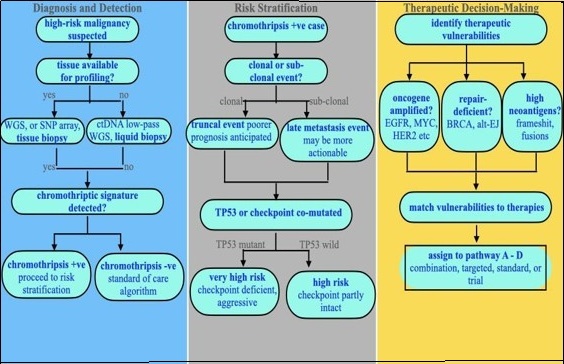
The classical model of genomic instability portrays cancer evolution as a gradual, stepwise accumulation of mutations over decades. Chromothripsis, first described in 2011, challenged this paradigm by demonstrating that tens to hundreds of clustered chromosomal rearrangements can arise within a single catastrophic event, effectively compressing prolonged evolutionary change into one cell cycle. This review synthesises current understanding of chromothripsis as a major driver of genomic catastrophe. We describe its defining genomic hallmarks and the mechanisms proposed to initiate chromothripsis, with particular emphasis on the micronucleus pathway, alongside alternative mechanisms involving breakage–fusion–bridge cycles and replication stress. Across these pathways, extensive chromosome fragmentation followed by error-prone repair can generate highly rearranged derivative chromosomes, including neochromosomes. The biological consequences are dichotomous: although most affected cells succumb to cell death, rare survivors can acquire multiple oncogenic alterations simultaneously, including oncogene amplification, tumor suppressor loss, and neomorphic gene fusions, thereby accelerating malignant transformation and therapeutic resistance. We survey chromothripsis across a broad spectrum of malignancies and congenital disorders. The review critically evaluates the prognostic significance of chromothripsis and emerging therapeutic implications, including potential vulnerabilities to PARP and ATR inhibition, and immune checkpoint blockade. Finally, we highlight unresolved questions and priorities for future research. Collectively, chromothripsis compels a fundamental reappraisal of genomic instability: rather than being exclusively a gradual process, it can occur as a sudden genomic catastrophe that reshapes the genome in a single event, with profound implications for biomarker discovery, cancer evolution, and precision oncology.
Downloads
References
1. Greaves M, Maley CC. Clonal evolution in cancer. Nature. 2012;481(7381):306–313. doi: 10.1038/nature10762.
2. Podlaha O, Riester M, De S, Michor F. Evolution of the cancer genome. Trends Genet. 2012;28(4):155–163. doi: 10.1016/j.tig.2012.01.003.
3. Laplane L, Maley CC. The evolutionary theory of cancer: challenges and potential solutions. Nat Rev Cancer. 2024;24(10):718–733. doi: 10.1038/s41568-024-00734-2.
4. Stephens PJ, Greenman CD, Fu B, Yang F, Bignell GR, Mudie LJ, et al. Massive genomic rearrangement acquired in a single catastrophic Event during cancer development. Cell. 2011;144(1):27–40. doi: 10.1016/j.cell.2010.11.055.
5. Zhang CZ, Leibowitz ML, Pellman D. Chromothripsis and beyond: rapid genome evolution from complex chromosomal rearrangements. Genes Dev. 2013;27(23):2513–2530. doi: 10.1101/gad.229559.113.
6. Umbreit NT, Zhang CZ, Lynch LD, Blaine LJ, Cheng AM, Tourdot R, et al. Mechanisms generating cancer genome complexity from a single cell division error. Science (1979). 2020;368(6488). doi: 10.1126/science.aba0712.
7. Duan H, Peng X, Qin S, Zhou Y, Xiao D, Tao Y, et al. Micronuclei: origins, assays, mechanisms, diseases and treatments. Signal Transduct Target Ther. 2026;11(1). doi: 10.1038/s41392-025-02538-8.
8. Cortés-Ciriano I, Lee JJK, Xi R, Jain D, Jung YL, Yang L, et al. Comprehensive analysis of chromothripsis in 2,658 human cancers using whole-genome sequencing. Nat Genet. 2020;52(3):331–341. doi: 10.1038/s41588-019-0576-7.
9. Ejaz U, Dou Z, Yao PY, Wang Z, Liu X, Yao X. Chromothripsis: an emerging crossroad from aberrant mitosis to therapeutic opportunities. J Mol Cell Biol. 2024;16(4). doi: 10.1093/jmcb/mjae016.
10. Pellestor F, Gatinois V. Chromoanagenesis: a piece of the macroevolution scenario. Mol Cytogenet. 2020;13(1). doi: 10.1186/s13039-020-0470-0.
11. Zhang CZ, Mendez-Dorantes C, Burns KH, Pellman D. A breakage–replication/fusion process explains complex rearrangements and segmental DNA amplification. Nat Genet. 2026;58(1):88–99. doi: 10.1038/s41588-025-02434-5.
12. Tubio JMC, Estivill X. When catastrophe strikes a cell. Nature. 2011;470(7335):476–277. doi: 10.1038/470476a.
13. Korbel JO, Campbell PJ. Criteria for inference of chromothripsis in cancer genomes. Cell. 2013;152(6):1226–1236. doi: 10.1016/j.cell.2013.02.023.
14. Kinsella M, Patel A, Bafna V. The elusive evidence for chromothripsis. Nucleic Acids Res. 2014;42(13):8231–8242. doi: 10.1093/nar/gku525.
15. Leibowitz ML, Zhang CZ, Pellman D. Chromothripsis: A new mechanism for rapid karyotype evolution. Annu Rev Genet. 2015;49(1):183–211. doi: 10.1146/annurev-genet-120213-092228.
16. Espejo Valle-Inclan J, de Noon S, Trevers K, Elrick H, van Belzen IAEM, Zumalave S, et al. Ongoing chromothripsis underpins osteosarcoma genome complexity and clonal evolution. Cell. 2025;188(2):352-370.e22. doi: 10.1016/j.cell.2024.12.005.
17. Righolt C, Mai S. Shattered and stitched chromosomes—chromothripsis and chromoanasynthesis—manifestations of a new chromosome crisis? Genes Chromosomes Cancer. 2012;51(11):975–981. doi: 10.1002/gcc.21981.
18. Zhang CZ, Spektor A, Cornils H, Francis JM, Jackson EK, Liu S, et al. Chromothripsis from DNA damage in micronuclei. Nature. 2015;522(7555):179–184. doi:10.1038/nature14493.
19. Shorokhova M, Nikolsky N, Grinchuk T. Chromothripsis—Explosion in genetic science. Cells. 2021;10(5):1102. doi: 10.3390/cells10051102.
20. Luijten MNH, Lee JXT, Crasta KC. Mutational game changer: Chromothripsis and its emerging relevance to cancer. Mutat Res Rev Mutat Res. 2018;777:29-51. doi: 10.1016/j.mrrev.2018.06.004.
21. Lagunas-Rangel FA. Chromothripsis in hematologic malignancies. Exp Hematol. 2024;132:104172. doi:10.1016/j.exphem.2024.104172.
22. Pellestor F. Chromoanagenesis: cataclysms behind complex chromosomal rearrangements. Mol Cytogenet. 2019;12(1). doi: 10.1186/s13039-019-0415-7.
23. Pellestor F, Gaillard JB, Schneider A, Puechberty J, Gatinois V. Chromoanagenesis, the mechanisms of a genomic chaos. Semin Cell Dev Biol. 2022;123:90–99. doi: 10.1016/j.semcdb.2021.01.004.
24. Yu J, Chen N, Zheng Z, Gao M, Liang N, Wong KC. Chromothripsis detection with multiple myeloma patients based on deep graph learning. Bioinformatics. 2023;39(7). doi: 10.1093/bioinformatics/btad422.
25. Logsdon GA, Vollger MR, Eichler EE. Long-read human genome sequencing and its applications. Nat Rev Genet. 2020;21(10):597–614. doi: 10.1038/s41576-020-0236-x.
26. Zeng Y, Lv W, Tao H, Li C, Jiang S, Liang Y, et al. Mapping the chromothripsis landscape in urothelial carcinoma unravels great intratumoral and intertumoral heterogeneity. iScience. 2025;28(1):111510. doi: 10.1016/j.isci.2024.111510.
27. Smirnov P, Przybilla MJ, Simovic-Lorenz M, Parra RG, Susak H, Ratnaparkhe M, et al. Multi-omic and single-cell profiling of chromothriptic medulloblastoma reveals genomic and transcriptomic consequences of genome instability. Nat Commun. 2024;15(1). doi: 10.1038/s41467-024-54547-w.
28. Utani K ichi, Okamoto A, Shimizu N. Generation of micronuclei during interphase by coupling between cytoplasmic membrane blebbing and nuclear budding. PLoS One. 2011;6(11):e27233. doi: 10.1371/journal.pone.0027233.
29. He B, Gnawali N, Hinman AW, Mattingly AJ, Osimani A, Cimini D. Chromosomes missegregated into micronuclei contribute to chromosomal instability by missegregating at the next division. Oncotarget. 2019;10(28):2660–2674. doi: 10.18632/oncotarget.26853.
30. Koltsova AS, Pendina AA, Efimova OA, Chiryaeva OG, Kuznetzova T v, Baranov VS. On the complexity of mechanisms and consequences of chromothripsis: An update. Front Genet. 2019;10. doi: 10.3389/fgene.2019.00393.
31. Mazzagatti A, Engel JL, Ly P. Boveri and beyond: Chromothripsis and genomic instability from mitotic errors. Mol Cell. 2024;84(1):55–69. doi: 10.1016/j.molcel.2023.11.002.
32. Poot M. Genes, proteins, and biological pathways preventing chromothripsis. Methods Mol Biol. 2018;1769:231–251. doi: 10.1007/978-1-4939-7780-2_15.
33. Terradas M, Martín M, Genescà A. Impaired nuclear functions in micronuclei results in genome instability and chromothripsis. Arch Toxicol. 2016;90(11):2657–2667. doi: 10.1007/s00204-016-1818-4.
34. Kneissig M, Keuper K, de Pagter MS, van Roosmalen MJ, Martin J, Otto H, et al. Micronuclei-based model system reveals functional consequences of chromothripsis in human cells. Elife. 2019;8. doi: 10.7554/elife.50292.
35. Ostapińska K, Styka B, Lejman M. Insight into the molecular basis underlying chromothripsis. Int J Mol Sci. 2022;23(6):3318. doi: 10.3390/ijms23063318.
36. Stiekema M, van Zandvoort MAMJ, Ramaekers FCS, Broers JL v. Structural and mechanical aberrations of the nuclear lamina in disease. Cells. 2020;9(8):1884. doi:10.3390/cells9081884.
37. Jones KM, Chauvin SD, Miner JJ. The intersection of TREX1, cGAS, STING and the DNA damage theory of aging. Front Aging. 2025;6. doi: 10.3389/fragi.2025.1720372.
38. Sorzano CO, Pascual-Montano A, Sánchez de Diego A, Martínez-A C, van Wely KH. Chromothripsis: breakage-fusion-bridge over and over again. Cell Cycle. 2013;12(13):2016-2023. doi: 10.4161/cc.25266.
39. Singh M, Raseley K, Perez AM, MacKenzie D, Kosiyatrakul ST, Desai S, et al. Elucidation of the molecular mechanism of the breakage-fusion-bridge (BFB) cycle using a CRISPR-dCas9 cellular model. Nucleic Acids Res. 2024;52(19):11689–11703. doi: 10.1093/nar/gkae747.
40. Raeisi Dehkordi S, Wong ITL, Ni J, Luebeck J, Zhu K, Prasad G, et al. Breakage fusion bridge cycles drive high oncogene number with moderate intratumoural heterogeneity. Nat Commun. 2025;16(1). doi: 10.1038/s41467-025-56670-8.
41. Dominguez-Sola D, Gautier J. MYC and the Control of DNA replication. Cold Spring Harb Perspect Med. 2014;4(6):a014423–a014423. doi: 10.1101/cshperspect.a014423.
42. Oravetzova A, Dvorakova M, Mihai AI, Andrs M, Sobol M, Zuev A, et al. Distinct mechanisms of replication stress induced by oncogenic RAS and cyclin E1 converge on R-loop-dependent fork reversal. Nat Commun. 2026;17(1). doi: 10.1038/s41467-026-71353-8.
43. Wilhelm T, Said M, Naim V. DNA replication stress and chromosomal instability: dangerous liaisons. Genes (Basel). 2020;11(6):642. doi: 10.3390/genes11060642.
44. Baker TM, Waise S, Tarabichi M, van Loo P. Aneuploidy and complex genomic rearrangements in cancer evolution. Nat Cancer. 2024;5(2):228–239. doi: 10.1038/s43018-023-00711-y.
45. Chang HHY, Pannunzio NR, Adachi N, Lieber MR. Non-homologous DNA end joining and alternative pathways to double-strand break repair. Nat Rev Mol Cell Biol. 2017;18(8):495–506. doi: 10.1038/nrm.2017.48.
46. Shen MM. Chromoplexy: A new category of complex rearrangements in the cancer genome. Cancer Cell. 2013;23(5):567–569. doi: 10.1016/j.ccr.2013.04.025.
47. Burssed B, Zamariolli M, Bellucco FT, Melaragno MI. Mechanisms of structural chromosomal rearrangement formation. Mol Cytogenet. 2022;15(1). doi: 10.1186/s13039-022-00600-6.
48. Kwiatek MT. Toward a model of repeat-driven chromosomal fragility in Triticeae: an integrated structural omics perspective. BMC Genomics. 2026;27(1). doi: 10.1186/s12864-026-12963-w.
49. Nazaryan-Petersen L, Bjerregaard VA, Nielsen FC, Tommerup N, Tümer Z. Chromothripsis and DNA repair disorders. J Clin Med. 2020;9(3):613. doi: 10.3390/jcm9030613.
50. Giunta S, Belotserkovskaya R, Jackson SP. DNA damage signaling in response to double-strand breaks during mitosis. J Cell Biol. 2010;190(2):197–207. doi: 10.1083/jcb.200911156.
51. Crasta K, Ganem NJ, Dagher R, Lantermann AB, Ivanova EV, Pan Y, et al. DNA breaks and chromosome pulverization from errors in mitosis. Nature. 2012;482(7383):53–58. doi: 10.1038/nature10802.
52. Shibata A, Jeggo PA. ATM’s role in the repair of DNA double-strand breaks. Genes (Basel). 2021;12(9):1370. doi: 10.3390/genes12091370.
53. Williams RM, Zhang X. Roles of ATM and ATR in DNA double strand breaks and replication stress. Prog Biophys Mol Biol. 2021;161:27–38. doi: 10.1016/j.pbiomolbio.2020.11.005.
54. di Bona M, Bakhoum SF. Micronuclei and Cancer. Cancer Discov. 2024;14(2):214–226. doi: 10.1158/2159-8290.cd-23-1073.
55. Hernández Borrero LJ, El-Deiry WS. Tumor suppressor p53: Biology, signaling pathways, and therapeutic targeting. Biochim Biophy Acta. 2021;1876(1):188556. doi: 10.1016/j.bbcan.2021.188556.
56. Yam CQX, Lim HH, Surana U. DNA damage checkpoint execution and the rules of its disengagement. Front Cell Dev Biol. 2022;10. doi: 10.3389/fcell.2022.1020643.
57. Krupina K, Goginashvili A, Cleveland DW. Scrambling the genome in cancer: causes and consequences of complex chromosome rearrangements. Nat Rev Genet. 2023;25(3):196–210. doi: 10.1038/s41576-023-00663-0.
58. Kim H, Nguyen NP, Turner K, Wu S, Gujar AD, Luebeck J, et al. Extrachromosomal DNA is associated with oncogene amplification and poor outcome across multiple cancers. Nat Genet. 2020;52(9):891–897. doi: 10.1038/s41588-020-0678-2.
59. Dong Y, He Q, Chen X, Yang F, He L, Zheng Y. Extrachromosomal DNA (ecDNA) in cancer: mechanisms, functions, and clinical implications. Front Oncol. 2023;13. doi: 10.3389/fonc.2023.1194405.
60. de Groot D, Spanjaard A, Hogenbirk MA, Jacobs H. Chromosomal rearrangements and chromothripsis: The alternative end generation model. Int J Mol Sci. 2023;24(1):794. doi: 10.3390/ijms24010794.
61. Forment JV, Kaidi A, Jackson SP. Chromothripsis and cancer: causes and consequences of chromosome shattering. Nat Rev Cancer. 2012;12(10):663–670. doi: 10.1038/nrc3352.
62. Shah A. Rethinking cancer initiation: The role of large-scale mutational events. Genes Chromosomes Cancer. 2023;63(1). doi: 10.1002/gcc.23213.
63. Maher CA, Wilson RK. Chromothripsis and human disease: Piecing together the shattering process. Cell. 2012;148(1–2):29–32. doi: 10.1016/j.cell.2012.01.006.
64. Cai H, Kumar N, Bagheri HC, von Mering C, Robinson MD, Baudis M. Chromothripsis-like patterns are recurring but heterogeneously distributed features in a survey of 22,347 cancer genome screens. BMC Genomics. 2014;15(1). doi: 10.1186/1471-2164-15-82.
65. Morishita M, Muramatsu T, Suto Y, Hirai M, Konishi T, Hayashi S, et al. Chromothripsis-like chromosomal rearrangements induced by ionizing radiation using proton microbeam irradiation system. Oncotarget. 2016;7(9):10182–10192. doi: 10.18632/oncotarget.7186.
66. Voronina N, Wong JKL, Hübschmann D, Hlevnjak M, Uhrig S, Heilig CE, et al. The landscape of chromothripsis across adult cancer types. Nat Commun. 2020;11(1). doi: 10.1038/s41467-020-16134-7.
67. Zepeda-Mendoza CJ, Morton CC. The iceberg under water: Unexplored complexity of chromoanagenesis in congenital disorders. Am J Hum Genet. 2019;104(4):565–577. doi: 10.1016/j.ajhg.2019.02.024.
68. Bolkestein M, Wong JKL, Thewes V, Körber V, Hlevnjak M, Elgaafary S, et al. Chromothripsis in human breast cancer. Cancer Res. 2020;80(22):4918–4931. doi: 10.1158/0008-5472.can-20-1920.
69. Arniani S, Pierini V, Pellanera F, Matteucci C, di Giacomo D, Bardelli V, et al. Chromothripsis is a frequent event and underlies typical genetic changes in early T-cell precursor lymphoblastic leukemia in adults. Leukemia. 2022;36(11):2577–2585. doi: 10.1038/s41375-022-01671-5.
70. Chen CY. Chromothripsis in myeloid malignancies. Ann Hematol. 2024;103(10):3955-3962. doi: 10.1007/s00277-024-05814-9.
71. Mcneil TR, Sikder S, Dalal Y. Cancer cells’ chamber of secrets: the link between micronuclei, chromothripsis and malignancy. Open Biol. 2025;15(5). doi: 10.1098/rsob.240388.
72. Kloosterman WP, Cuppen E. Chromothripsis in congenital disorders and cancer: similarities and differences. Curr Opin Cell Biol. 2013;25(3):341–348. doi: 10.1016/j.ceb.2013.02.008.
73. Villela D, Mazzonetto PC, Migliavacca MP, Perrone E, Guida G, Milanezi MFG, et al. Congenital chromoanagenesis in the routine postnatal chromosomal microarray analyses. Am J Med Genet A. 2021;185(8):2335–2344. doi: 10.1002/ajmg.a.62237.
74. Fukami M, Shima H, Suzuki E, Ogata T, Matsubara K, Kamimaki T. Catastrophic cellular events leading to complex chromosomal rearrangements in the germline. Clin Genet. 2017;91(5):653–660. doi: 10.1111/cge.12928.
75. Pastorczak A, Urbanska Z, Styka B, Miarka-Walczyk K, Sedek L, Wypyszczak K, et al. Genetic hallmarks and clinical implications of chromothripsis in childhood T-cell acute lymphoblastic leukemia. Leukemia. 2024;38(11):2344–2354. doi: 10.1038/s41375-024-02370-z.
76. de Pagter MS, van Roosmalen MJ, Baas AF, Renkens I, Duran KJ, van Binsbergen E, et al. Chromothripsis in healthy individuals affects multiple protein-coding genes and can result in severe congenital abnormalities in offspring. Am J Hum Genet. 2015;96(4):651–656. doi: 10.1016/j.ajhg.2015.02.005.
77. Ivkov R, Bunz F. Pathways to chromothripsis. Cell Cycle. 2015;14(18):2886-90. doi: 10.1080/15384101.2015.1068483.
78. Singh SM, Castellani CA, Hill KA. Postzygotic somatic mutations in the human brain expand the threshold-liability model of schizophrenia. Front Psychiatry. 2020;11. doi: 10.3389/fpsyt.2020.587162.
79. Iourov IY, Vorsanova SG, Kurinnaia OS, Kutsev SI, Yurov YB. Somatic mosaicism in the diseased brain. Mol Cytogenet. 2022;15(1). doi: 10.1186/s13039-022-00624-y.
80. Tang S, Stokasimov E, Cui Y, Pellman D. Breakage of cytoplasmic chromosomes by pathological DNA base excision repair. Nature. 2022;606(7916):930–936. doi: 10.1038/s41586-022-04767-1.
81. Skuja E, Kalniete D, Nakazawa-Miklasevica M, Daneberga Z, Abolins A, Purkalne G, et al. Chromothripsis and progression-free survival in metastatic colorectal cancer. Mol Clin Oncol. 2017;6(2):182–186. doi: 10.3892/mco.2017.1123.
82. Krupina K, Goginashvili A, Baughn MW, Moore S, Steele CD, Nguyen AT, et al. Chromothripsis and ecDNA initiated by N4BP2 nuclease fragmentation of cytoplasm-exposed chromosomes. Science (1979). 2025;390(6778):1156–1163. doi: 10.1126/science.ado0977.
83. Ram M, Fraser M, Vieira dos Santos J, Tasakis R, Islam A, Abo-Donia J, et al. The genetic and molecular drivers of multiple myeloma: Current insights, clinical implications, and the path forward. Pharmgenomics Pers Med. 2024;17:573–609. doi: 10.2147/pgpm.s350238.
84. Jones MJK, Jallepalli PV. Chromothripsis: Chromosomes in crisis. Dev Cell. 2012;23(5):908–917. doi: 10.1016/j.devcel.2012.10.010.
85. Hu Q, Espejo Valle-Inclán J, Dahiya R, Guyer A, Mazzagatti A, Maurais EG, et al. Non-homologous end joining shapes the genomic rearrangement landscape of chromothripsis from mitotic errors. Nat Commun. 2024;15(1). doi: 10.1038/s41467-024-49985-5.
86. Qiu Z, Oleinick NL, Zhang J. ATR/CHK1 inhibitors and cancer therapy. Radiother Oncol. 2018;126(3):450–464. doi: 10.1016/j.radonc.2017.09.043.
87. dos Santos ES, Cicilini AL, Simões MFE, Baz M, Caputo SM, Rouleau E. PARP inhibitor sensitivity in tumors harboring non-BRCA homologous recombination gene alterations: Current evidence across ovarian, breast, prostate, and pancreatic cancers. Int J Mol Sci. 2026;27(15):6754. doi: 10.3390/ijms27156754.
88. Shoshani O, Brunner SF, Yaeger R, Ly P, Nechemia-Arbely Y, Kim DH, et al. Chromothripsis drives the evolution of gene amplification in cancer. Nature. 2020;591(7848):137–141. doi: 10.1038/s41586-020-03064-z.
89. Zhao XK, Xing P, Song X, Zhao M, Zhao L, Dang Y, et al. Focal amplifications are associated with chromothripsis events and diverse prognoses in gastric cardia adenocarcinoma. Nat Commun. 2021;12(1). doi: 10.1038/s41467-021-26745-3.
90. Bestetti I, Crippa M, Sironi A, Bellini M, Tumiatti F, Ballabio S, et al. Long-read sequencing reveals chromothripsis in a molecularly unsolved case of Cornelia de Lange syndrome. Front Genet. 2024;15. doi: 10.3389/fgene.2024.1358334.
91. Storchová Z, Kloosterman WP. The genomic characteristics and cellular origin of chromothripsis. Curr Opin Cell Biol. 2016;40:106–113. doi: 10.1016/j.ceb.2016.03.003.
92. Ly P, Cleveland DW. Rebuilding chromosomes after catastrophe: Emerging mechanisms of chromothripsis. Trends Cell Biol. 2017;27(12):917–930. doi: 10.1016/j.tcb.2017.08.005.
93. Técher H, Pasero P. The replication stress response on a narrow path between genomic instability and inflammation. Front Cell Dev Biol. 2021;9. doi: 10.3389/fcell.2021.702584.
94. Fu H, Redon CE, Brenner HM, Ack MR, Aladjem MI. Replication origin flexibility: a tool to mitigate the hazards of excess replication. Trend Genet. 2026;42(6):510–23. doi: 10.1016/j.tig.2026.02.005.
95. Ullah MF. Broken and reassembled: The molecular mechanisms and clinical consequences of structural genomic variation. Mol Syndromol. 2026;1–22. doi: 10.1159/000552262.
96. Petryk N, Kahli M, d’Aubenton-Carafa Y, Jaszczyszyn Y, Shen Y, Silvain M, et al. Replication landscape of the human genome. Nat Commun. 2016;7(1). doi: 10.1038/ncomms10208.
97. Lanteri L, Perrot A, Schausi-Tiffoche D, Wu PYJ. Impact of chromosomal context on origin selection and the replication program. Genes (Basel). 2022;13(7):1244. doi: 10.3390/genes13071244.
98. Li Z, Zhang Z. A tale of two strands: Decoding chromatin replication through strand-specific sequencing. Mol Cell. 2025;85(2):238–261. doi: 10.1016/j.molcel.2024.10.035.
99. Sankar V, Hung KL, Gnanasekar A, Wong ITL, Shi Q, Kraft K, et al. Genetic elements promote retention of extrachromosomal DNA in cancer cells. Nature. 2025;649(8095):152–160. doi: 10.1038/s41586-025-09764-8.
100. Simovic M, Ernst A. Chromothripsis, DNA repair and checkpoints defects. Semin Cell Dev Biol. 2022;123:110–114. doi: 10.1016/j.semcdb.2021.02.001.
101. Brierley CK, Yip BH, Orlando G, Wen J, Wen S, Goyal H, et al. Chromothripsis-associated chromosome 21 amplification orchestrates transformation to blast-phase MPN through targetable overexpression of DYRK1A. Nat Genet. 2025;57(6):1478–1492. doi: 10.1038/s41588-025-02190-6.
102. Cho MG, Gupta GP. Unveiling cGAS mechanisms: Insights into DNA damage and immune sensing in cancer. DNA Repair (Amst). 2025;152:103868. doi: 10.1016/j.dnarep.2025.103868.
103. Tan S, Nepovimova E, Valko M, Jomova K, Wu Q, Kuca K. The cGAS-STING pathway in senescence and aging-related diseases: mechanisms and therapeutic opportunities. Cell Commun Signal. 2026;24(1). doi: 10.1186/s12964-026-02855-7.
104. Wu D, Sun JKL, Chow KHM. Neuronal cell cycle reentry events in the aging brain are more prevalent in neurodegeneration and lead to cellular senescence. PLoS Biol. 2024;22(4):e3002559. doi: 10.1371/journal.pbio.3002559.
Downloads
Published
How to Cite
Issue
Section
License
Copyright (c) 2026 Al-Rafidain Journal of Medical Sciences ( ISSN 2789-3219 )

This work is licensed under a Creative Commons Attribution-NonCommercial-ShareAlike 4.0 International License.
Published by Al-Rafidain University College. This is an open access journal issued under the CC BY-NC-SA 4.0 license (https://creativecommons.org/licenses/by-nc-sa/4.0/).