Pharmacokinetic Study of Intravenous Lomustine and Intranasal Lomustine-Loaded Solusome Nanovesicle in Rats for Brain Targeting
DOI:
https://doi.org/10.54133/ajms.v11i1.2959Keywords:
Brain targeting, Glioblastoma multiforme, HPLC validation, Lomustine, Nose to brain delivery, SolusomesAbstract
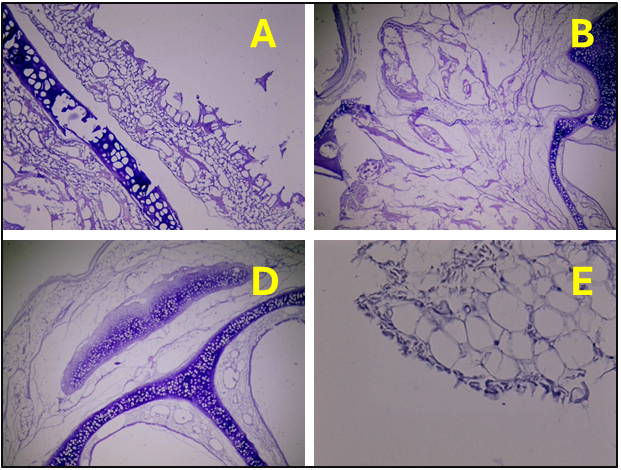
Background: Glioblastoma multiforme is a Grade IV, very aggressive malignancy and the most frequent primary cancer of the central nervous system. Despite its favorable alkylating agent property and use in the treatment of GBM, the low aqueous solubility and high dose-related systemic toxicity restrict the clinical use of lomustine. Objectives: The aim of the study was to design and optimize a high-performance liquid chromatography assay to measure lomustine and to assess the pharmacokinetic properties of a novel nano-vesicular delivery system, lomustine-loaded solusomes, to estimate nose-to-brain targeting. Methods: Solosomes of lomustine were developed by the thin-film hydration method. Their ability to target the brain was tested in vivo with 84 Wistar rats. The pharmacokinetic parameters were determined after intranasal administration of solusomal formulation and compared with intravenous administration of a lomustine solution for 72 hours. Results: When delivered intranasally, lomustine-loaded solusomes achieved greatly improved brain targeting with a 2.3-fold greater maximum brain concentration (Cmax) than with intravenous delivery and a shorter time to peak concentration (Tmax). The formulation showed high targeting efficiency, with drug targeting efficiency (DTE% 486.22) and direct transport percentage (DTP% 64.8). Histopathological analysis was used to establish the preservation of the integrity of nasal mucosa, and the formulation was found to be safe and non-irritating. Conclusions: Solusomes administered through the nasal route are effective in bypassing the blood-brain barrier through olfactory and trigeminal routes. The method has proven to be an effective way of increasing concentrations of therapeutic agents in the brain without worsening the safety profile.
Downloads
References
Chen J, Han P, Dahiya S. Glioblastoma: Changing concepts in the WHO CNS5 classification. Indian J Pathol Microbiol. 2022;65(Supplement):S24-S32. doi: 10.4103/ijpm.ijpm_1109_21.
Price M, Ballard CAP, Benedetti JR, Kruchko C, Barnholtz-Sloan JS, et al. CBTRUS statistical report: Primary brain and other central nervous system tumors diagnosed in the United States in 2018-2022. Neuro Oncol. 2025;27(Supplement_ 4): iv1-iv66. doi: 10.1093/neuonc/noaf194. DOI: https://doi.org/10.1093/neuonc/noaf194
Schaff LR, Mellinghoff IK. Glioblastoma and other primary brain malignancies in adults: A review. JAMA. 2023;329(7):574-587. doi: 10.1001/jama.2023.0023. DOI: https://doi.org/10.1001/jama.2023.0023
Lee E, Yong RL, Paddison P, Zhu J. Comparison of glioblastoma (GBM) molecular classification methods. Semin Cancer Biol. 2018;53:201-211. doi: 10.1016/j.semcancer.2018.07.006. DOI: https://doi.org/10.1016/j.semcancer.2018.07.006
Bellamy C, Hajal C, Ligon KL, Touat M. Revisiting an old therapy for new, promising combinations: Biology and perspectives of lomustine in glioma treatment. Neuro Oncol. 2025;27(12):3043-3057. doi: 10.1093/neuonc/noaf192. DOI: https://doi.org/10.1093/neuonc/noaf192
Baer JC, Freeman AA, Newlands ES, Watson AJ, Rafferty JA, Margison GP. Depletion of O6-alkylguanine-DNA alkyltransferase correlates with potentiation of temozolomide and CCNU toxicity in human tumor cells. Br J Cancer. 1993;67(6):1299-302. doi: 10.1038/bjc.1993.241. DOI: https://doi.org/10.1038/bjc.1993.241
Taal W, Oosterkamp HM, Walenkamp AM, Dubbink HJ, Beerepoot LV, Hanse MC, et al. Single-agent bevacizumab or lomustine versus a combination of bevacizumab plus lomustine in patients with recurrent glioblastoma (BELOB trial): a randomized controlled phase 2 trial. Lancet Oncol. 2014;15(9):943-953. doi: 10.1016/S1470-2045(14)70314-6. DOI: https://doi.org/10.1016/S1470-2045(14)70314-6
Ahles TA. Brain vulnerability to chemotherapy toxicities. Psychooncology. 2012;21(11):1141-1148. doi: 10.1002/pon.3196. DOI: https://doi.org/10.1002/pon.3196
Zorkina Y, Abramova O, Ushakova V, Morozova A, Zubkov E, Valikhov M, et al. Nano carrier drug delivery systems for the treatment of neuropsychiatric disorders: Advantages and limitations. Molecules. 2020;25(22):5294. doi: 10.3390/molecules25225294. DOI: https://doi.org/10.3390/molecules25225294
Abdallah M, Mohamed AS, Tadros MI, El-Nabarawi M, Tawfik MA. Solusomes (novel Soluplus® enriched nano-vesicular carriers) for improving the oral bioavailability of Candesartan cilexetil. Pharm Dev Technol. 2024;29(1):13-24. doi: 10.1080/10837450.2023.2289166. DOI: https://doi.org/10.1080/10837450.2023.2289166
Jeong SH, Jang JH, Lee YB. Drug delivery to the brain via the nasal route of administration: exploration of key targets and major consideration factors. J Pharm Investig. 2023;53(1):119-152. doi: 10.1007/s40005-022-00589-5. DOI: https://doi.org/10.1007/s40005-022-00589-5
Patel V, Chavda V, Shah J. Nanotherapeutics in neuropathologies: Obstacles, challenges, and recent advancements in CNS-targeted drug delivery systems. Curr Neuropharmacol. 2021;19(5):693-7 10. doi: 10.2174/1570159X18666200807143526. DOI: https://doi.org/10.2174/1570159X18666200807143526
Mittal D, Ali A, Md S, Baboota S, Sahni JK, Ali J. Insights into direct nose-to-brain delivery: current status and future perspective. Drug Deliv. 2014;21(2):75-86. doi: 10.3109/10717544.2013.838713. DOI: https://doi.org/10.3109/10717544.2013.838713
Butola M, Nainwal N. Non-invasive techniques of nose-to-brain delivery using nanoparticulate carriers: Hopes and hurdles. AAPS PharmSciTech. 2024;25(8):256. doi: 10.1208/s12249-024-02946-z. DOI: https://doi.org/10.1208/s12249-024-02946-z
Agu RU. Challenges in nasal drug absorption: how far have we come? Ther Deliv. 2016;7(7):495-510. doi: 10.4155/tde-2016-0022. DOI: https://doi.org/10.4155/tde-2016-0022
Pardeshi CV, Belgamwar VS. Direct nose-to-brain drug delivery via integrated nerve pathways bypassing the blood-brain barrier: an excellent platform for brain targeting. Expert Opin Drug Deliv. 2013;10(7):957-972. doi: 10.1517/17425247.2013.790887. DOI: https://doi.org/10.1517/17425247.2013.790887
Fisusi FA, Siew A, Chooi KW, Okubanjo O, Garrett N, Lalatsa K, et al. Lomustine nanoparticles enable both bone marrow sparing and high brain drug levels–a strategy for brain cancer treatments. Pharm Res. 2016;33(5):1289-1303. doi: 10.1007/s11095-016-1872-x. DOI: https://doi.org/10.1007/s11095-016-1872-x
KuKanich B, Warner M, Hahn K. Analysis of lomustine drug content in FDA-approved and compounded lomustine capsules. J Am Vet Med Assoc. 2017;250(3):322-326. doi: 10.2460/javma.250.3.322. DOI: https://doi.org/10.2460/javma.250.3.322
Barzani HAH, Ali HS, Anwar Omer R, Sulaiman SH, Salih MI, Qader AF. Quantifying nitrosoureas: Comprehensive insights into analytical techniques transforming cancer research. Crit Rev Anal Chem. 2025:1-22. doi: 10.1080/10408347.2025.2511141. DOI: https://doi.org/10.1080/10408347.2025.2511141
Sulaiman HT, Rajab NA., Preparation and characterization of olmesartan medoxomil-loaded polymeric mixed micelle nanocarrier. Iraqi J Pharm Sci. 2024;33(4SI):89–100. doi: 10.31351/vol33iss(4SI)pp89-100. DOI: https://doi.org/10.31351/vol33iss(4SI)pp89-100
Seshaiah KR, Samanta SK, Reddy VK, Prasadaraju VV, Mukkanti K, Reddy VR. A stability-indicating liquid chromatographic method for Lomustine. J Pharm Biomed Anal. 2011;54(1):213-216. doi: 10.1016/j.jpba.2010.07.020. DOI: https://doi.org/10.1016/j.jpba.2010.07.020
Pascoe PJ. Anesthesia and pain management. Oral and Maxillofacial Surgery in Dogs and Cats. 2nd ed. Elsevier Health Sciences, 2019: p. 22–28. Available at: https://shop.elsevier.com/books/oral-and-maxillofacial-surgery-in-dogs-and-cats/verstraete/978-0-7020-7675-6
Culot M, Fabulas-da Costa A, Sevin E, Szorath E, Martinsson S, et al. A simple method for assessing free brain/free plasma ratios using an in vitro model of the blood brain barrier. PLoS One. 2013;8(12):e80634. doi: 10.1371/journal.pone.0080634. DOI: https://doi.org/10.1371/journal.pone.0080634
Banfi G, Salvagno GL, Lippi G. The role of ethylenediamine tetraacetic acid (EDTA) as an in vitro anticoagulant for diagnostic purposes. Clin Chem Lab Med. 2007;45(5):565-76. doi: 10.1515/CCLM.2007.110. PMID: 17484616. DOI: https://doi.org/10.1515/CCLM.2007.110
Nielsen MK, Johansen SS. Determination of olanzapine in whole blood using simple protein precipitation and liquid chromatography-tandem mass spectrometry. J Anal Toxicol. 2009;33(4):212-217. doi: 10.1093/jat/33.4.212. DOI: https://doi.org/10.1093/jat/33.4.212
Choudhary S, Kaur IP, Malik J. Development and validation of a novel, rapid gradient HPLC method for simultaneous estimation of bioactive marker compounds in a mixture of Convolvulus pluricaulis, Withania somnifera, and Bacopa monnieri extracts. J Chromatogr Sci. 2020;57(10):920-930. doi: 10.1093/chromsci/bmz075. DOI: https://doi.org/10.1093/chromsci/bmz075
Gupta S, Kesarla R, Chotai N, Misra A, Omri A. Systematic approach for the formulation and optimization of solid lipid nanoparticles of efavirenz by high-pressure homogenization using design of experiments for brain targeting and enhanced bioavailability. Biomed Res Int. 2017;2017:5984014. doi: 10.1155/2017/5984014. DOI: https://doi.org/10.1155/2017/5984014
Capriotti AL, Cavaliere C, Piovesana S, Stampachiacchiere S, Ventura S, Zenezini Chiozzi R, et al. Characterization of quinoa seed proteome combining different protein precipitation techniques: Improvement of knowledge of nonmodel plant proteomics. J Sep Sci. 2015;38(6):1017-1025. doi: 10.1002/jssc.201401319. DOI: https://doi.org/10.1002/jssc.201401319
Wermeling DP. Intranasal delivery of antiepileptic medications for treatment of seizures. Neurotherapeutics. 2009;6(2):352-358. doi: 10.1016/j.nurt.2009.01.002. DOI: https://doi.org/10.1016/j.nurt.2009.01.002
Wang D, Gao Y, Yun L. Study on brain targeting of raltitrexed following intranasal administration in rats. Cancer Chemother Pharmacol. 2006;57(1):97-104. doi: 10.1007/s00280-005-0018-3. DOI: https://doi.org/10.1007/s00280-005-0018-3
Kansu L, Aydın E, Akkaya H, Avcı S, Akalın N. Shrinkage of nasal mucosa and cartilage during formalin fixation. Balkan Med J. 2017;34(5):458-463. doi: 10.4274/balkanmedj.2015.1470. DOI: https://doi.org/10.4274/balkanmedj.2015.1470
Cardiff RD, Miller CH, Munn RJ. Manual hematoxylin and eosin staining of mouse tissue sections. Cold Spring Harb Protoc. 2014;2014(6):655-658. doi: 10.1101/pdb.prot073411. DOI: https://doi.org/10.1101/pdb.prot073411
Kozlovskaya L, Abou-Kaoud M, Stepensky D. Quantitative analysis of drug delivery to the brain via nasal route. J Control Release. 2014;189:133-140. doi: 10.1016/j.jconrel.2014.06.053. DOI: https://doi.org/10.1016/j.jconrel.2014.06.053
Nguyen TT, Maeng HJ. Pharmacokinetics and pharmacodynamics of intranasal solid lipid nanoparticles and nanostructured lipid carriers for nose-to-brain delivery. Pharmaceutics. 2022;14(3):572. doi: 10.3390/pharmaceutics14030572. DOI: https://doi.org/10.3390/pharmaceutics14030572
Shrestha N, Khan S, Neupane YR, Dang S, Md S, Fahmy UA, et al. Tailoring midazolam-loaded chitosan nanoparticulate formulation for enhanced brain delivery via intranasal route. Polymers (Basel). 2020;12(11):2589. doi: 10.3390/polym12112589. DOI: https://doi.org/10.3390/polym12112589
Karasulu E, Yavasoğlu A, Evrensanal Z, Uyanikgil Y, Karasulu HY. Permeation studies and histological examination of sheep nasal mucosa following administration of different nasal formulations with or without absorption enhancers. Drug Deliv. 2008;15(4):219-225. doi: 10.1080/10717540802006377. DOI: https://doi.org/10.1080/10717540802006377
Katona G, Sabir F, Sipos B, Naveed M, Schelz Z, Zupkó I, et al. Development of lomustine and n-propyl gallate co-encapsulated liposomes for targeting glioblastoma multiforme via intranasal administration. Pharmaceutics. 2022;14(3):631. doi: 10.3390/pharmaceutics14030631. DOI: https://doi.org/10.3390/pharmaceutics14030631
Alaayedi MH, Maraie NK. Lomustine's nanoemulsion as nose-to-brain drug delivery system for CNS tumor treatment. Saudi Pharm J. 2023;31(8):101692. doi: 10.1016/j.jsps.2023.06.025. DOI: https://doi.org/10.1016/j.jsps.2023.06.025
Anand A, Iyer BR, Ponnusamy C, Pandiyan R, Sugumaran A. Design and development of lomustine loaded chitosan nanoparticles for efficient brain targeting. Cardiovasc Hematol Agents Med Chem. 2020;18(1):45-54. doi: 10.2174/1871525718666200203112502. DOI: https://doi.org/10.2174/1871525718666200203112502
Downloads
Published
How to Cite
Issue
Section
License
Copyright (c) 2026 Al-Rafidain Journal of Medical Sciences ( ISSN 2789-3219 )

This work is licensed under a Creative Commons Attribution-NonCommercial-ShareAlike 4.0 International License.
Published by Al-Rafidain University College. This is an open access journal issued under the CC BY-NC-SA 4.0 license (https://creativecommons.org/licenses/by-nc-sa/4.0/).