Exploring Nurse-Pharmacist Collaboration for Medication Safety in Iraqi Hospitals: A Qualitative Study from the Nursing Perspective
DOI:
https://doi.org/10.54133/ajms.v11i1.3051Keywords:
Interprofessional collaboration, Iraqi hospitals, Medication safety , Nurse-pharmacist collaboration, Nursing perspective, Qualitative studyAbstract
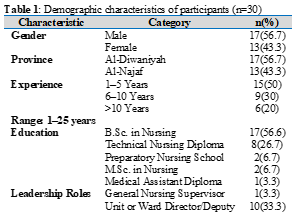
Background: Effective nurse-pharmacist collaboration is essential to medication safety, but evidence documenting this relationship from nurses’ viewpoints remains limited within Iraq. Objective: To explore nurses’ perspectives and experiences regarding collaborative practices with hospital pharmacists in promoting medication safety, identifying key challenges from a nursing standpoint, and providing recommendations for improvement. Methods: A qualitative study using semi-structured interviews with 30 nurses across eight public hospitals in two governorates (November 2025-January 2026). Participants were recruited using purposive and snowball sampling. The Stutsky and Laschinger Interprofessional Collaborative Practice framework guided the study, and data were analyzed using Braun and Clarke’s inductive thematic analysis. Results: A total of 30 nurses participated (17 male, 13 female), with experience ranging from 1 to 25 years. Six themes emerged: interprofessional communication, characterized by need-based consultation and pharmacist condescension deterring two-thirds of nurses; role understanding and dynamics, marked by role ambiguity and nurses assuming patient education responsibilities; collaborative practice and safety, reflecting universal error detection and nurse-reported improvements in care quality; systemic and organizational barriers, including staffing shortages (n=29), night-shift unavailability (n=25), and physician-stamp bureaucracy (n=25); institutional support and leadership, marked by the absence of formal collaborative policies; and enablers of collaboration, including mutual trust (n=23), joint education (n=22), and clinical pharmacist presence (n=10). Conclusions: Nurses acknowledge the clinical value of collaborating with pharmacists for medication safety, but structural, behavioral, and organizational barriers hinder this potential. Enhancing this collaboration requires institutionalizing joint training, expanding clinical pharmacy services, and developing clear collaborative policies.
Downloads
References
Gilbert JH, Yan J, Hoffman SJ. A WHO report: framework for action on interprofessional education and collaborative practice. J Allied Health. 2010;39(Suppl 1):196-7. PMID: 21174039.
De Baetselier E, Dilles T, Feyen H, Haegdorens F, Mortelmans L, Van Rompaey B. Nurses' responsibilities and tasks in pharmaceutical care: A scoping review. Nurs Open. 2022;9(6):2562-2571. doi: 10.1002/nop2.984. DOI: https://doi.org/10.1002/nop2.984
Ravi P, Pfaff K, Ralph J, Cruz E, Bellaire M, Fontanin G. Nurse-pharmacist collaborations for promoting medication safety among community-dwelling adults: A scoping review. Int J Nurs Stud Adv. 2022;4:100079. doi: 10.1016/j.ijnsa.2022.100079. DOI: https://doi.org/10.1016/j.ijnsa.2022.100079
Alanazi FAF, Alanazi AHH, Alanazi SSA, Albagmi N, Aljaizani NM, Sulaimani SA, et al. Synergistic Care in General Medicine: Leveraging the Nurse-Pharmacist Partnership to Improve Safety, Efficacy, and Outcomes. Saudi Med Public Health. 2024;1(1):179-192. doi: 10.64483/20251133. DOI: https://doi.org/10.64483/20251133
Alanazi RF, Alshammri KMK, Aldhaferi AHG, Basheer FAH, Al-Ghamdi EA, Almutari SSM, et al. Investigating collaborative strategies between nurses and pharmacists in Saudi hospitals. J Int Crisis Risk Communicat Res. 2;7(S6):1035-1039.
Wakob I, Schiek S, Bertsche T. Overcoming barriers in nurse-pharmacist collaborations on wards - Qualitative expert interviews with nurses and pharmacists. J Multidiscip Healthc. 2023;16:937-949. doi: 10.2147/JMDH.S408390. DOI: https://doi.org/10.2147/JMDH.S408390
El-Awaisi A, Yakti OH, Elboshra AM, Jasim KH, AboAlward AF, Shalfawi RW, et al. Facilitators and barriers to interprofessional collaboration among health professionals in primary healthcare centers in Qatar: a qualitative exploration using the "Gears" model. BMC Prim Care. 2024;25(1):316. doi: 10.1186/s12875-024-02537-8. DOI: https://doi.org/10.1186/s12875-024-02537-8
Kobrai-Abkenar F, Salimi S, Pourghane P. "Interprofessional Collaboration" among pharmacists, physicians, and nurses: A hybrid concept analysis. Iran J Nurs Midwifery Res. 2024;29(2):238-244. doi: 10.4103/ijnmr.ijnmr_336_22. DOI: https://doi.org/10.4103/ijnmr.ijnmr_336_22
Farzi S, Irajpour A, Saghaei M, Ravaghi H. Weak professional interactions as main cause of medication errors in intensive care units in Iran. Iranian Red Crescent Med J. 2017;19(11). doi: 10.5812/ircmj.14946. DOI: https://doi.org/10.5812/ircmj.14946
Ding B, Zhao R, Yue X, Li D. Regional differences, distributional dynamics and spatial convergence of pharmacist human resources in China: A healthcare tiers difference perspective. Risk Manag Healthc Policy. 2025;18:2769-2785. doi: 10.2147/RMHP.S534923. DOI: https://doi.org/10.2147/RMHP.S534923
Wei H, Horns P, Sears SF, Huang K, Smith CM, Wei TL. A systematic meta-review of systematic reviews about interprofessional collaboration: facilitators, barriers, and outcomes. J Interprof Care. 2022;36(5):735-749. doi: 10.1080/13561820.2021.1973975. DOI: https://doi.org/10.1080/13561820.2021.1973975
Al-Twigey M, Al-Fayyadh S. Inter-professional team collaboration among health care team members in critical care units: Targeting cooperating, coordinating, and partnership in Najaf governorate, Iraq. Malaysian J Nurs. 2024;16(Suppl 1):68-78. doi: 10.31674/mjn.2024.v16isupp1.007. DOI: https://doi.org/10.31674/mjn.2024.v16isupp1.007
Al-Twigey MA, Al-Fayyadh SA. Interprofessional collaboration among health care team members in critical care units: Highlighting the professional qualities. J Fac Med Baghdad. 2025;67(1):27-35. doi: 10.32007/jfacmedbaghdad2420. DOI: https://doi.org/10.32007/jfacmedbaghdad2420
Stutsky BJ, Spence Laschinger H. Development and testing of a conceptual framework for interprofessional collaborative practice. Health Interprof Pract Edu. 2014;2(2):eP1066. doi: 10.7710/2159-1253.1066. DOI: https://doi.org/10.7710/2159-1253.1066
Braun V, Clarke V. Using thematic analysis in psychology. Qualitat Res Psychol. 2006;3(2):77-101. doi: 10.1191/1478088706qp063oa. DOI: https://doi.org/10.1191/1478088706qp063oa
Amin MEK, Nørgaard LS, Cavaco AM, Witry MJ, Hillman L, Cernasev A, et al. Establishing trustworthiness and authenticity in qualitative pharmacy research. Res Social Adm Pharm. 2020;16(10):1472-1482. doi: 10.1016/j.sapharm.2020.02.005. DOI: https://doi.org/10.1016/j.sapharm.2020.02.005
Helgesen AK, Nome CM, Stenbjerg JK, Arnesen MH, Aardalen TR, Dilles T, et al. Pharmaceutical care in primary healthcare-A study of nurses', pharmacists', and physicians' experiences of interprofessional collaboration. Healthcare (Basel). 2024;12(11):1100. doi: 10.3390/healthcare12111100. DOI: https://doi.org/10.3390/healthcare12111100
Nassrullah Z, Al-Jumaili AA. Professional challenges facing pharmacists working at public hospitals in an Iraqi province: A qualitative study. Iraqi J Pharm Sci. 2023;32(Suppl.):204-213. doi: 10.31351/vol32issSuppl.pp204-213. DOI: https://doi.org/10.31351/vol32issSuppl.pp204-213
Ibrahim SM, Abu Hamour K, Mahfouz FA, Abdel Jalil MH, Hammad EA. Hospital staff perspectives: medication reconciliation responsibility and barriers at a tertiary teaching hospital in Jordan. J Pharm Health Services Res. 2021;12(3):405-409. doi: 10.1093/jphsr/rmab031. DOI: https://doi.org/10.1093/jphsr/rmab031
Feldman LS, Costa LL, Feroli ER, Nelson T, Poe SS, Frick KD, et al. Nurse-pharmacist collaboration on medication reconciliation prevents potential harm. J Hosp Med. 2012;7(5):396-401. doi: 10.1002/jhm.1921. DOI: https://doi.org/10.1002/jhm.1921
Alanazi MFT, Alhumoud GOA, Alamoudi FAO, Alotaibi FSM, Albargi TM, Alanazi RMH, et al. Pharmacist-nurse collaborative medication reconciliation: Impact on post-discharge readmission rates. Rev Diabet Studies. 2025;21(3):486–496. doi: 10.70082/285xvf79. DOI: https://doi.org/10.70082/285xvf79
Rajakumar S, Rajah R, Thanimalai S, Mokhtar FBM, Ramachandram DS. Intravenous medication administration errors in hospitalised patients: An updated systematic review. J Eval Clin Pract. 2025;31(4):e70167. doi: 10.1111/jep.70167. DOI: https://doi.org/10.1111/jep.70167
Al-Jumaili AA, Ali MM. Appraising the role of pharmacists in medication reconciliation at hospital discharge: A field-based study. Al-Rafidain J Med Sci. 2023;5(1S):S57-63. doi: 10.54133/ajms.v5i1S.319. DOI: https://doi.org/10.54133/ajms.v5i1S.319
Nassrullah ZM, Al-Jumaili AA. Are newly graduated pharmacists competent to perform adequately in hospitals? A qualitative study. Al-Rafidain J Med Sci. 2024;6(1):55-62. doi: 10.54133/ajms.v6i1.427. DOI: https://doi.org/10.54133/ajms.v6i1.427
Tamata AT, Mohammadnezhad M. A systematic review study on the factors affecting shortage of nursing workforce in the hospitals. Nurs Open. 2023;10(3):1247-1257. doi: 10.1002/nop2.1434. DOI: https://doi.org/10.1002/nop2.1434
Al-Jumaili AA, Elhiny R, Thomas D, Elbarbry F, Khdour M, Sherbeny F, et al. Factors impacting job satisfaction among pharmacists in the Arab world: A qualitative study. Saudi Pharm J. 2023;31(4):578-584. doi: 10.1016/j.jsps.2023.02.010. DOI: https://doi.org/10.1016/j.jsps.2023.02.010
Ali AS, Mohammed SI, Al-Hamadani FY. Levels of workplace-associated stress and depression in Iraqi community pharmacists: A cross-sectional observational study. Al-Rafidain J Med Sciences. 2025;8(2):96-101. doi: 10.54133/ajms.v8i2.1858. DOI: https://doi.org/10.54133/ajms.v8i2.1858
Al-Jumaili AA, Abbood SK, Abbas AN, Rafaeel HM, Mohammed FR, Ali AZ. Organization factors influencing nurse ability to prevent and detect adverse drug events in public hospitals using a patient safety model. Saudi Pharm J. 2021;29(10):1216-1222. doi: 10.1016/j.jsps.2021.09.003. DOI: https://doi.org/10.1016/j.jsps.2021.09.003
Wang J, Waghorn J, Khoo S, Patel H, Remmington C. Review of adult critical care calls to the out-of-hours resident pharmacist service: A retrospective single-center observation study. Cureus. 2025;17(4):e83112. doi: 10.7759/cureus.83112. DOI: https://doi.org/10.7759/cureus.83112
Standish JC, Chapman L, Cloyd O, Johnson K, Mellody K, Fisher K, et al. Optimization of medication workflows to improve timely medication administration on a pediatric hospital unit: A quality improvement project. J Pediatr Pharmacol Ther. 202;30(4):476-483. doi: 10.5863/JPPT-23-00139. DOI: https://doi.org/10.5863/JPPT-23-00139
Ahmed KK, Al-Jumaili AA, Aladul MI, Farhan MS, Al-Ghuraibawi FHM, Al-Sayegh HF. Pharmacy education and practice in Iraq: expanding roles, and fostering research. Int J Pharm Pract. 2026. doi: 10.1093/ijpp/riag072. DOI: https://doi.org/10.1093/ijpp/riag072
Mostafa LS, Sabri NA, El-Anwar AM, Shaheen SM. Evaluation of pharmacist-led educational interventions to reduce medication errors in emergency hospitals: a new insight into patient care. J Public Health (Oxf). 2020;42(1):169-174. doi: 10.1093/pubmed/fdy216. PMID: 30608549. DOI: https://doi.org/10.1093/pubmed/fdy216
Mikhael EM, Nassir KF, Alkhaqani AL, Jabbar ZR. Effectiveness of pharmacist-led nurse education on enoxaparin injection technique in Baghdad Teaching Hospital, Iraq. Al-Rafidain J Med Sciences. 2024;6(1):202-207. doi: 10.54133/ajms.v6i1.622. DOI: https://doi.org/10.54133/ajms.v6i1.622
Mohammed Ali MN, Al-Hamadani FY. Impact of clinical pharmacist-led educational intervention on nursing practice of intravenous chemotherapy administration: A quasi-experimental design. Al-Rafidain J Med Sciences. 2025;9(1):230-237. doi: 10.54133/ajms.v9i1.2277. DOI: https://doi.org/10.54133/ajms.v9i1.2277
Jaam M, Naseralallah LM, Hussain TA, Pawluk SA. Pharmacist-led educational interventions provided to healthcare providers to reduce medication errors: A systematic review and meta-analysis. Erratum in: PLoS One. 2023;18(11):e0294195. doi: 10.1371/journal.pone.0294195. DOI: https://doi.org/10.1371/journal.pone.0294195
Alkhaqani AL. Exploring Nurses’ Knowledge and Attitudes Concerning Basic Life Support: A Questionnaire Survey Study. Al-Rafidain J Med Sci. 2023;5:40-47. DOI: https://doi.org/10.54133/ajms.v5i.145
Downloads
Published
How to Cite
Issue
Section
License
Copyright (c) 2026 Al-Rafidain Journal of Medical Sciences ( ISSN 2789-3219 )

This work is licensed under a Creative Commons Attribution-NonCommercial-ShareAlike 4.0 International License.
Published by Al-Rafidain University College. This is an open access journal issued under the CC BY-NC-SA 4.0 license (https://creativecommons.org/licenses/by-nc-sa/4.0/).