RRx-001 Accelerates Low Dose Oxaliplatin-Induced Cytotoxicity in Triple-Negative Breast Cancer Cells via Synergistic Antitumor Mechanisms
DOI:
https://doi.org/10.54133/ajms.v11i1.3019Keywords:
Chou–Talalay analysis, Combination index, Drug synergism, RRx-001, Triple-negative breast cancerAbstract
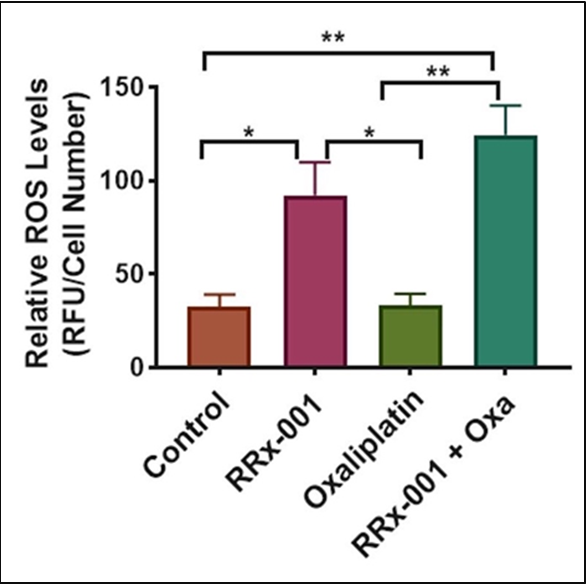
Background: Triple-negative breast cancer (TNBC) represents an aggressive subtype that has few therapeutic options for targeting and is highly resistant to chemotherapy. The compound RRx-001 is a dinitroazetidine compound with both immune-modulating and epigenetic properties, whereas oxaliplatin elicits immunogenic cell death. Objective: To evaluate the synergistic cytotoxic effects of RRx-001 combined with oxaliplatin in MDA-MB-231 TNBC cells. Methods: Viability assays using the MTT assay were performed. The IC50 concentrations were derived from dose response curves. The drug interaction analysis was completed utilizing the Chou-Talalay method, along with CompuSyn software to calculate the combination index (CI) and dose reduction index (DRI). The intracellular reactive oxygen species (ROS) levels were assayed by performing a fluorometric assay with DCFH-DA. Results: RRx-001 exhibited greater cytotoxicity (IC50=9.878 µM) than did oxaliplatin (IC50=202.2 µM). When the two drugs were used, the combination resulted in a significant decrease in the IC50 value for oxaliplatin (to 9.705 µM, ≈20.9-fold reduction). A strong synergy was seen (CI=0.0227 at Fa=0.05) with significant reductions in the doses required for each drug. Additionally, a combination of these two drugs significantly increases amounts of ROS compared to either drug alone. Conclusions: RRx-001 has been shown to significantly enhance the cytotoxicity of oxaliplatin through synergistic and ROS-mediated pathways, suggesting that it may represent a viable option for a dose-sparing combinatorial therapeutic approach to treat TNBC.
Downloads
References
Giaquinto AN, Sung H, Newman LA, Freedman RA, Smith RA, et al. Breast cancer statistics 2024. CA Cancer J Clin. 2024;74(6):477–495. doi: 10.3322/caac.21863. DOI: https://doi.org/10.3322/caac.21863
Siegel RL, Giaquinto AN, Jemal A. Cancer statistics, 2024. CA Cancer J Clin. 2024;74(1):12–49. doi: 10.3322/caac.21820. DOI: https://doi.org/10.3322/caac.21820
Obidiro O, Battogtokh G, Akala EO. Triple negative breast cancer treatment options and limitations: future outlook. Pharmaceutics. 2023;15(7):1796. doi: 10.3390/pharmaceutics15071796. DOI: https://doi.org/10.3390/pharmaceutics15071796
Aggarwal S, Verma SS, Aggarwal S, Gupta SC. Drug repurposing for breast cancer therapy: old weapon for new battle. Semin Cancer Biol. 2021;68:8–20. doi: 10.1016/j.semcancer.2019.09.012. DOI: https://doi.org/10.1016/j.semcancer.2019.09.012
Waks AG, Winer EP. Breast cancer treatment: a review. JAMA. 2019;321(3):288–300. doi: 10.1001/jama.2018.19323. DOI: https://doi.org/10.1001/jama.2018.19323
Johnstone TC, Suntharalingam K, Lippard SJ. The next generation of platinum drugs: targeted Pt(II) agents, nanoparticle delivery, and Pt(IV) prodrugs. Chem Rev. 2016;116(5):3436–3486. doi: 10.1021/acs.chemrev.5b00597. DOI: https://doi.org/10.1021/acs.chemrev.5b00597
Derakhshan F, Reis-Filho JS. Pathogenesis of triple-negative breast cancer. Annu Rev Pathol. 2022;17:181–204. doi: 10.1146/annurev-pathol-042420-093238. DOI: https://doi.org/10.1146/annurev-pathol-042420-093238
Andreidesz K, Koszegi B, Kovacs D, Vantus VB, Gallyas F, Kovacs K. Effect of oxaliplatin, olaparib and LY294002 in combination on triple-negative breast cancer cells. Int J Mol Sci. 2021;22(4):2056. doi: 10.3390/ijms22042056. DOI: https://doi.org/10.3390/ijms22042056
Wang J, Zhang H, Yin X, Bian Y. Oxaliplatin induces immunogenic cell death in human and murine laryngeal cancer. J Oncol. 2022;2022:3760766. doi: 10.1155/2022/3760766. DOI: https://doi.org/10.1155/2022/3760766
Galluzzi L, Vitale I, Warren S, Adjemian S, Agostinis P, Martinez AB, et al. Consensus guidelines for the definition, detection and interpretation of immunogenic cell death. J Immunother Cancer. 2023;11(4):e006562. doi: 10.1136/jitc-2023-006562.
Niavarani SR, St-Cyr G, Daniel L, Lawson C, Giguère H, Alkayyal AA, et al. Heterologous prime-boost cellular vaccination induces potent antitumor immunity against triple negative breast cancer. Front Immunol. 2023;14:1098344. doi: 10.3389/fimmu.2023.1098344. DOI: https://doi.org/10.3389/fimmu.2023.1098344
Oronsky B, Reid TR, Larson C, Caroen S, Quinn M, Burbano E, et al. REPLATINUM phase III randomized study: RRx-001 plus platinum doublet versus platinum doublet in third-line small cell lung cancer. Future Oncol. 2019;15(30):3427–3433. doi: 10.2217/fon-2019-0317. DOI: https://doi.org/10.2217/fon-2019-0317
Oronsky B, Guo X, Wang X, Cabrales P, Sher D, Cannizzo L, et al. Discovery of RRx-001, a Myc and CD47 downregulating small molecule with tumor targeted cytotoxicity and healthy tissue cytoprotective properties in clinical development. J Med Chem. 2021;64(11):7261–7271. doi: 10.1021/acs.jmedchem.1c00599. DOI: https://doi.org/10.1021/acs.jmedchem.1c00599
Caroen S, Oronsky B, Reid T, Pandher K, Lopez A. Superficial venous-associated inflammation from direct IV administration of RRx-001 in rats. Int J Med Sci. 2022;19(11):1628–1630. doi: 10.7150/ijms.74889. DOI: https://doi.org/10.7150/ijms.76615
Jayabalan N, Oronsky B, Cabrales P, Reid T, Caroen S, Johnson AM, et al. A review of RRx-001: a late-stage multi-indication inhibitor of NLRP3 activation and chronic inflammation. Drugs. 2023;83(5):389–402. doi: 10.1007/s40265-023-01838-z. DOI: https://doi.org/10.1007/s40265-023-01838-z
Paulsen CE, Carroll KS. Cysteine-mediated redox signaling: chemistry, biology, and tools for discovery. Chem Rev. 2023;123(13):7085–7185. doi: 10.1021/acs.chemrev.2c00897. DOI: https://doi.org/10.1021/acs.chemrev.2c00897
Chen Y, He H, Lin B, Chen Y, Deng X, Jiang W, et al. RRx-001 ameliorates inflammatory diseases by acting as a potent covalent NLRP3 inhibitor. Cell Mol Immunol. 2021;18(6):1425–1436. doi: 10.1038/s41423-021-00683-y. DOI: https://doi.org/10.1038/s41423-021-00683-y
Oronsky B, Takahashi L, Gordon R, Cabrales P, Caroen S, Reid T. RRx-001: a chimeric triple action NLRP3 inhibitor, Nrf2 inducer, and nitric oxide superagonist. Front Oncol. 2023;13:1204143. doi: 10.3389/fonc.2023.1204143. DOI: https://doi.org/10.3389/fonc.2023.1204143
Zhao H, Ning S, Nolley R, Scicinski J, Oronsky B, Knox SJ, et al. The immunomodulatory anticancer agent, RRx-001, induces an interferon response through epigenetic induction of viral mimicry. Clin Epigenetics. 2017;9:4. doi: 10.1186/s13148-017-0312-z. DOI: https://doi.org/10.1186/s13148-017-0312-z
Zhao H, Ning S, Scicinski J, Oronsky B, Knox SJ, Peehl DM. Epigenetic effects of RRx-001: a possible unifying mechanism of anticancer activity. Oncotarget. 2015;6(41):43172–43181. doi: 10.18632/oncotarget.6526. DOI: https://doi.org/10.18632/oncotarget.6526
Cabrales P. RRx-001 acts as a dual small molecule checkpoint inhibitor by downregulating CD47 on cancer cells and SIRP-α on monocytes/macrophages. Transl Oncol. 2019;12(4):626–632. doi: 10.1016/j.tranon.2018.12.001. DOI: https://doi.org/10.1016/j.tranon.2018.12.001
Mosmann T. Rapid colorimetric assay for cellular growth and survival: application to proliferation and cytotoxicity assays. J Immunol Methods. 1983;65(1–2):55–63. doi: 10.1016/0022-1759(83)90303-4. DOI: https://doi.org/10.1016/0022-1759(83)90303-4
LeBel CP, Ischiropoulos H, Bondy SC. Evaluation of the probe 2',7'-dichlorofluorescin as an indicator of reactive oxygen species formation and oxidative stress. Chem Res Toxicol. 1992;5(2):227–231. doi: 10.1021/tx00026a012. DOI: https://doi.org/10.1021/tx00026a012
Chou TC. Drug combination studies and their synergy quantification using the Chou-Talalay method. Cancer Res. 2010;70(2):440–446. doi: 10.1158/0008-5472.CAN-09-1947. DOI: https://doi.org/10.1158/0008-5472.CAN-09-1947
Duarte D, Vale N. Evaluation of synergism in drug combinations and reference models for future orientations in oncology. Curr Res Pharmacol Drug Discov. 2022;3:100110. doi: 10.1016/j.crphar.2022.100110. DOI: https://doi.org/10.1016/j.crphar.2022.100110
Xu L, Xu P, Wang J, Ji H, Zhang L, Tang Z. Advancements in clinical research and emerging therapies for triple-negative breast cancer treatment. Eur J Pharmacol. 2025;988:177202. doi: 10.1016/j.ejphar.2024.177202. DOI: https://doi.org/10.1016/j.ejphar.2024.177202
Hu XE, Yang P, Chen S, Wei G, Yuan L, Yang Z, et al. Clinical and biological heterogeneities in triple-negative breast cancer reveals a non-negligible role of HER2-low. Breast Cancer Res. 2023;25(1):34. doi: 10.1186/s13058-023-01639-y. DOI: https://doi.org/10.1186/s13058-023-01639-y
Jie H, Ma W, Huang C. Diagnosis, prognosis, and treatment of triple-negative breast cancer: a review. Breast Cancer. 2025;17:265–274. doi: 10.2147/BCTT.S514443. DOI: https://doi.org/10.2147/BCTT.S516542
Devanabanda B, Kasi A. Oxaliplatin. In: xPharm: The Comprehensive Pharmacology Reference. Elsevier; 2023:1–4. doi: 10.1016/B978-0-08-100150-2.00000-0.
Al Mulla Hummadi YMK, Al-Khfajy WSD, Jasem MA. Cinnamic acid enhances vinorelbine-induced cytotoxicity in MDA-MB-231 cells through modulation of PTEN and ATG5 expression. J Pharmacol Exp Ther. 2025;392:103654. doi: 10.1124/jpet.124.002316. DOI: https://doi.org/10.1016/j.jpet.2025.103654
Yue T, Zeng L, Zhang Y, Li J, Li J. Aminooxyacetic acid sensitizes colon cancer cells to oxaliplatin by inhibiting H2S production and enhancing ROS-mediated apoptosis. J Cancer. 2020;11(7):1828–1839. doi: 10.7150/jca.37863. DOI: https://doi.org/10.7150/jca.35375
Zhu H, Shan Y, Ge K, Lu J, Kong W, Jia C. Oxaliplatin induces immunogenic cell death in hepatocellular carcinoma cells and synergizes with immune checkpoint blockade therapy. Cell Oncol (Dordr). 2020;43(6):1203–1214. doi: 10.1007/s13402-020-00552-2. DOI: https://doi.org/10.1007/s13402-020-00552-2
Salim W, Arif IS, Al-Sudani BT. Role of fasting mimicking diet in farnesoid X receptor for suppressing epithelial-to-mesenchymal transition, cell cycle progression, and viability of prostate cancer cells. Iraqi J Pharm Sci. 2023;32(1):115–124. doi: 10.31351/vol32iss1pp115-124. DOI: https://doi.org/10.31351/vol32iss1pp115-124
Al-Hamdy RAN, Arif IS, Al-Sudani BT. SHIP2 silencing enhances erastin cytotoxicity in MDA-MB-231 breast cancer cell line. Al-Rafidain J Med Sci. 2025;8(2):182–187. doi: 10.54133/ajms.v8i2.1916. DOI: https://doi.org/10.54133/ajms.v8i2.1916
Salih AI, Mshimesh BA-R, Al-Sudani BT. Exploring the effect of EX-527 as a selective SIRT1 inhibitor against MCF-7 breast cell line by modulating POLD1 activity. Al Mustansiriyah J Pharm Sci. 2025;25(3):291–301. doi: 10.32947/ajps.v25i3.1204. DOI: https://doi.org/10.32947/ajps.v25i3.1204
Downloads
Published
How to Cite
Issue
Section
License
Copyright (c) 2026 Al-Rafidain Journal of Medical Sciences ( ISSN 2789-3219 )

This work is licensed under a Creative Commons Attribution-NonCommercial-ShareAlike 4.0 International License.
Published by Al-Rafidain University College. This is an open access journal issued under the CC BY-NC-SA 4.0 license (https://creativecommons.org/licenses/by-nc-sa/4.0/).