Synergistic Anticancer Effects of Gemcitabine and Resveratrol on A549 Non-Small Cell Lung Cancer Cell Line
DOI:
https://doi.org/10.54133/ajms.v10i1.2651Keywords:
Gemcitabine , Non-small cell lung cancer , Resveratrol , Drug synergismAbstract
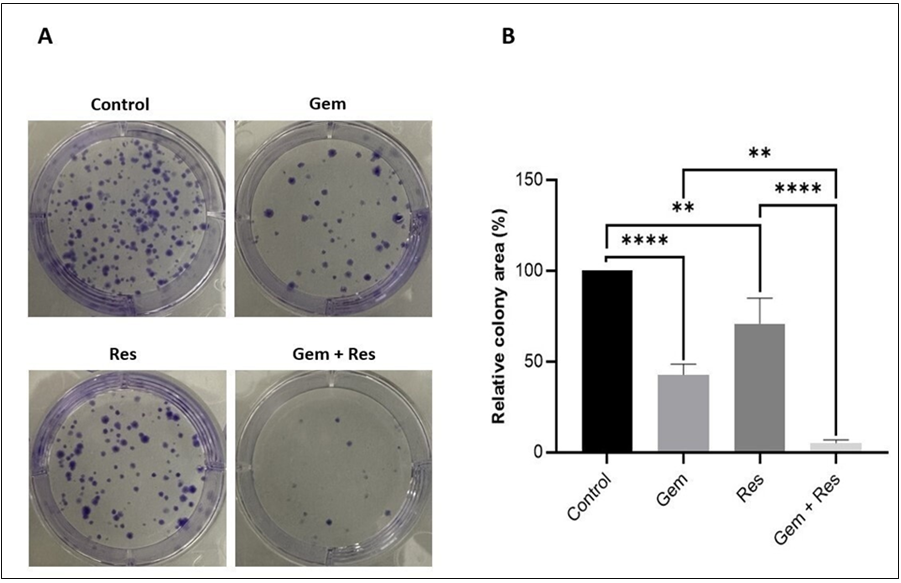
Background: Non-small cell lung cancer (NSCLC) remains the leading cause of cancer-related mortality worldwide. Gemcitabine is an established effective agent in the treatment of NSCLC. However, resistance and dose-dependent toxicity limit the clinical efficacy of gemcitabine. Resveratrol, a polyphenolic compound, has been proposed as a chemosensitizing agent capable of modulating multiple survival pathways. Objective: To assess whether resveratrol enhances the anticancer activity of gemcitabine in A549 NSCLC cells. Methods: The viability of A549 cells was assessed using the 3-(4,5-dimethylthiazol-2-yl)-2,5-diphenyltetrazolium bromide (MTT) method. The synergistic interaction was analyzed using a constant molar ratio of 1:75 (gemcitabine: resveratrol). The combination index (CI) and dose reduction index (DRI) values were calculated across multiple effect levels. To see how the combination changed the ability of cells to divide and migrate, we used the clonogenic and wound-healing assays, respectively. Results: The data showed that combining gemcitabine and resveratrol increased cytotoxicity compared to using either drug alone. This was shown by CI values that were consistently below 1.0 for all effect levels that were tested. The DRI values for both drugs were greater than 1.0 at all the effect levels, suggesting dose-sparing potential. In addition, the combination significantly decreased the colony formation and cell migration compared with individual drug treatments. Conclusion: Resveratrol potentiated the anticancer effects of gemcitabine in A549 cells via synergistic cytotoxicity and enhanced suppression of the clonogenic survival and migratory potential.
Downloads
References
Mahdi MF, Raauf AM. Molecular modelling, Synthesis and antiproliferative avaluation of new phenyldiazenyl)-pyrazol Schiff base derivatives. Al Mustansiriyah J Pharm Sci. 2024;24(1):25-37. doi: 10.32947/ajps.v24i1.999. DOI: https://doi.org/10.32947/ajps.v24i1.999
Hasan HA, Ali KF, Mehdi WA. Synthesis, characterization, docking study and biological activates of new 3-aminorhodanine derivatives. Al Mustansiriyah Journal of Pharmaceutical Sciences. 2024;24(3):299-310. doi: 10.32947/ajps.v24i3.1072. DOI: https://doi.org/10.32947/ajps.v24i3.1072
Chen CP, Hung TH, Hsu PC, Yeh CN, Huang WK, Pan YR, Hsiao YT, Lo CH, Wu CE. Synergistic effects of MK-1775 and gemcitabine on cytotoxicity in non-small cell lung cancer. Heliyon. 2024;10(22):e40299. doi: 10.1016/j.heliyon.2024.e40299. DOI: https://doi.org/10.1016/j.heliyon.2024.e40299
Formisano L, Jansen VM, Marciano R, Bianco R. From Biology to therapy: Improvements of therapeutic options in lung cancer. Anticancer Agents Med Chem. 2018;18(9):1235-1240. doi: 10.2174/1871520617666170912123416. DOI: https://doi.org/10.2174/1871520617666170912123416
Guarín-González YA, Cabello-Guzmán G, Von-Plessing C, Segura-del Río R, Barraza LF, Martin-Martín A, et al. Synthesis of nano-in-microcapsule delivery systems of nanomagnetite, microzeolite and gemcitabine in a chitosan matrix, with activity against lung cancer cells. Materials Today. 2024. doi: 10.2139/ssrn.4680352. DOI: https://doi.org/10.2139/ssrn.4680352
Larson AC, Knoche SM, Brumfield GL, Doty KR, Gephart BD, Moore-Saufley PR, et al. Gemcitabine modulates HLA-I regulation to improve tumor antigen presentation by pancreatic cancer cells. Int J Mol Sci. 2024;25(6):3211. doi: 10.3390/ijms25063211. DOI: https://doi.org/10.3390/ijms25063211
Himura R, Kawano S, Nagata Y, Kawai M, Ota A, Kudo Y, et al. Inhibition of aldo-keto reductase 1C3 overcomes gemcitabine/cisplatin resistance in bladder cancer. Chemico-Biol Interact. 2024;388:110840. doi: 10.1016/j.cbi.2023.110840. DOI: https://doi.org/10.1016/j.cbi.2023.110840
Larson AC, Doty KR, Solheim JC. The double life of a chemotherapy drug: Immunomodulatory functions of gemcitabine in cancer. Cancer Med. 2024;13(10):e7287. doi: 10.1002/cam4.7287. DOI: https://doi.org/10.1002/cam4.7287
Yalçın S, Erkan M, Ünsoy G, Parsian M, Kleeff J, Gündüz U. Effect of gemcitabine and retinoic acid loaded PAMAM dendrimer-coated magnetic nanoparticles on pancreatic cancer and stellate cell lines. Biomed Pharmacother. 2014;68(6):737-743. doi: 10.1016/j.biopha.2014.07.003. DOI: https://doi.org/10.1016/j.biopha.2014.07.003
Swarnakar NK, Thanki K, Jain S. Enhanced antitumor efficacy and counterfeited cardiotoxicity of combinatorial oral therapy using doxorubicin- and coenzyme Q10-liquid crystalline nanoparticles in comparison with intravenous adriamycin. Nanomed Nanotechnol Biol Med. 2014;10(6):1231-41. doi: 10.1016/j.nano.2014.03.003. DOI: https://doi.org/10.1016/j.nano.2014.03.003
Rudzińska A, Juchaniuk P, Oberda J, Wiśniewska J, Wojdan W, Szklener K, et al. Phytochemicals in cancer treatment and cancer prevention—review on epidemiological data and clinical trials. Nutrients. 2023;15(8):1896. doi: 10.3390/nu15081896. DOI: https://doi.org/10.3390/nu15081896
Aluyen JK, Ton QN, Tran T, Yang AE, Gottlieb HB, Bellanger RA. Resveratrol: potential as anticancer agent. J Diet Suppl. 2012;9(1):45-56. doi: 10.3109/19390211.2011.650842. DOI: https://doi.org/10.3109/19390211.2011.650842
Borriello A, Bencivenga D, Caldarelli I, Tramontano A, Borgia A, Virginia Adriana Pirozzi A, et al. Resveratrol and cancer treatment: is hormesis a yet unsolved matter? Curr Pharm Design. 2013;19(30):5384-5393. doi: 10.2174/1381612811319300007. DOI: https://doi.org/10.2174/1381612811319300007
Moar K, Brahma M, Kakde GS, Pant A, Maruthi M, Maurya PK. Protective effect of resveratrol against non-small cell lung cancer: In-vitro and in-silico studies. Polycyclic Aromatic Compounds. 2025;45(4):681-696. doi: 10.1080/10406638.2024.2416068. DOI: https://doi.org/10.1080/10406638.2024.2416068
Sichetti M, Giuseffi M, Giglio E, Marino G, Mecca M. Effect of natural polyphenols on breast cancer chemoprevention and treatment. Mol Nutr Food Res. 2025:e70055. doi: 10.1002/mnfr.70055. DOI: https://doi.org/10.1002/mnfr.70055
Maleki M, Tabnak P, Golchin A, Yousefi B, Nazari A. Resveratrol inhibited colorectal cancer progression by reducing oxidative DNA damage by targeting the JNK signaling pathway. Heliyon. 2024;10(21). doi: 10.1016/j.heliyon.2024.e38631. DOI: https://doi.org/10.1016/j.heliyon.2024.e38631
Sukocheva OA. Resveratrol and pancreatic cancers: Questions and future perspectives. World Journal of Gastrointestinal Oncology. 2025;17(3):100342. doi: 10.4251/wjgo.v17.i3.100342. DOI: https://doi.org/10.4251/wjgo.v17.i3.100342
Wan Z, Hallajzadeh J. The beneficial effects of resveratrol on hepatocellular carcinoma and nonalcoholic fatty liver disease: Modulation of apoptosis, autophagy, inflammation, and oxidative stress. Food Sci Nutr. 2025;13(7):e70555. doi: 10.1002/fsn3.70555. DOI: https://doi.org/10.1002/fsn3.70555
Hummadi YMKAM, Al-Khfajy WSD, Jasem MA. Cinnamic acid enhances vinorelbine-induced cytotoxicity in MDA-MB-231 cells through modulation of PTEN and ATG5 expression. J Pharmacol Exp Ther. 2025;392(8):103654. doi: 10.1016/j.jpet.2025.103654. DOI: https://doi.org/10.1016/j.jpet.2025.103654
Chou TC, Talalay P. Quantitative analysis of dose-effect relationships: the combined effects of multiple drugs or enzyme inhibitors. Adv Enzyme Regul. 1984;22:27-55. doi: 10.1016/0065-2571(84)90007-4. DOI: https://doi.org/10.1016/0065-2571(84)90007-4
Chou TC. Theoretical basis, experimental design, and computerized simulation of synergism and antagonism in drug combination studies. Pharmacol Rev. 2006;58(3):621-681. doi: 10.1124/pr.58.3.10. DOI: https://doi.org/10.1124/pr.58.3.10
Guzman C, Bagga M, Kaur A, Westermarck J, Abankwa D. ColonyArea: an ImageJ plugin to automatically quantify colony formation in clonogenic assays. PloS One. 2014;9(3):e92444. doi: 10.1371/journal.pone.0092444. DOI: https://doi.org/10.1371/journal.pone.0092444
Salim W, Arif IS, Al-Sudani BT. Role of fasting mimicking diet in farnesoid x receptor for suppressing epithelial-to-mesenchymal transition, cell cycle progression, and viability of prostate cancer cells. Iraqi J Pharm Sci. 2023;32(1):115-124. doi: 10.31351/vol32iss1pp115-124. DOI: https://doi.org/10.31351/vol32iss1pp115-124
Kadhim ME, Rajab NA. Cytotoxicity of sericin nanoparticles loaded with paclitaxel as a pulmonary drug delivery system: in vitro and in vivo studies. Al-Rafidain J Med Sci. 2024;7(1):144-152. doi: 10.54133/ajms.v7i1.1153. DOI: https://doi.org/10.54133/ajms.v7i1.1153
Hatami E, Nagesh PK, Jaggi M, Chauhan SC, Yallapu MM. Gambogic acid potentiates gemcitabine induced anticancer activity in non-small cell lung cancer. Eur J Pharmacol. 2020;888:173486. doi: 10.1016/j.ejphar.2020.173486. DOI: https://doi.org/10.1016/j.ejphar.2020.173486
Su SH, Sundhar N, Kuo WW, Lai SC, Kuo CH, Ho TJ, et al. Artemisia argyi extract induces apoptosis in human gemcitabine-resistant lung cancer cells via the PI3K/MAPK signaling pathway. J Ethnopharmacol. 2022;299:115658. doi: 10.1016/j.jep.2022.115658. DOI: https://doi.org/10.1016/j.jep.2022.115658
Tang Y, Wang Y, Teng X. Sequence‑dependent effect of gemcitabine and cisplatin on A549 non‑small‑cell lung cancer cells. Mol Med Rep. 2013;8(1):221-226. doi: 10.3892/mmr.2013.1495. DOI: https://doi.org/10.3892/mmr.2013.1495
Wang S, Su ZF, Yuan Y, Li J. Synergistic effects of sorafenib in combination with gemcitabine or pemetrexed in lung cancer cell lines with K-ras mutations. Contemp Oncol. 2016;20(1):33-38. doi: 10.5114/wo.2016.58499. DOI: https://doi.org/10.5114/wo.2016.58499
Fan Y, Li J, Yang Y, Zhao X, Liu Y, Jiang Y, et al. Resveratrol modulates the apoptosis and autophagic death of human lung adenocarcinoma A549 cells via a p53-dependent pathway: Integrated bioinformatics analysis and experimental validation. Int J Oncol. 2020;57(4):929-938. doi: 10.3892/ijo.2020.5107. DOI: https://doi.org/10.3892/ijo.2020.5107
Li X, Li F, Wang F, Li J, Lin C, Du J. Resveratrol inhibits the proliferation of A549 cells by inhibiting the expression of COX-2. OncoTarget Ther. 2018:2981-2989. doi: 10.2147/OTT.S157613. DOI: https://doi.org/10.2147/OTT.S157613
Cocetta V, Quagliariello V, Fiorica F, Berretta M, Montopoli M. Resveratrol as chemosensitizer agent: state of art and future perspectives. Int J Mol Sci. 2021;22(4):2049. doi: 10.3390/ijms22042049. DOI: https://doi.org/10.3390/ijms22042049
Mirzapur P, Khazaei MR, Moradi MT, Khazaei M. Apoptosis induction in human breast cancer cell lines by synergic effect of raloxifene and resveratrol through increasing proapoptotic genes. Life Sci. 2018;205:45-53. doi: 10.1016/j.lfs.2018.04.035. DOI: https://doi.org/10.1016/j.lfs.2018.04.035
Dun J, Chen X, Gao H, Zhang Y, Zhang H, Zhang Y. Resveratrol synergistically augments anti-tumor effect of 5-FU in vitro and in vivo by increasing S-phase arrest and tumor apoptosis. Exp Biol Med. 2015;240(12):1672-1681. doi: 10.1177/1535370215573396. DOI: https://doi.org/10.1177/1535370215573396
Arribas J, Bech-Serra JJ, Santiago-Josefat B. ADAMs, cell migration and cancer. Cancer Metastasis Rev. 2006;25(1):57-68. doi: 10.1007/s10555-006-7889-6. DOI: https://doi.org/10.1007/s10555-006-7889-6
Harikumar KB, Kunnumakkara AB, Sethi G, Diagaradjane P, Anand P, Pandey MK, et al. Resveratrol, a multitargeted agent, can enhance antitumor activity of gemcitabine in vitro and in orthotopic mouse model of human pancreatic cancer. Int J Cancer. 2010;127(2):257-268. doi: 10.1002/ijc.25041. DOI: https://doi.org/10.1002/ijc.25041
Jiang Z, Chen X, Chen K, Sun L, Gao L, Zhou C, et al. YAP inhibition by resveratrol via activation of AMPK enhances the sensitivity of pancreatic cancer cells to gemcitabine. Nutrients. 2016;8(10):546. doi: 10.3390/nu8100546. DOI: https://doi.org/10.3390/nu8100546
Wu S, Ren J, Qian W, Gong M, Li J, Qin T, et al. Synergistic effects of resveratrol with gemcitabine in pancreatic cancer chemotherapy by inhibiting the c-Met/PARP1 axis. J Pancreatol. 2024;7(04):267-278. DOI: 10.1097/JP9.0000000000000160. DOI: https://doi.org/10.1097/JP9.0000000000000160
Qin SH, Lau AT, Liang ZL, Tan HW, Ji YC, Zhong QH, et al. Resveratrol promotes tumor microvessel growth via endoglin and extracellular signal-regulated kinase signaling pathway and enhances the anticancer efficacy of gemcitabine against lung cancer. Cancers. 2020;12(4):974. doi: 10.3390/cancers12040974. DOI: https://doi.org/10.3390/cancers12040974
Hu S, Li X, Xu R, Ye L, Kong H, Zeng X, et al. The synergistic effect of resveratrol in combination with cisplatin on apoptosis via modulating autophagy in A549 cells. Acta Biochim Biophys Sinica. 2016;48(6):528-535. doi: 10.1093/abbs/gmw026. DOI: https://doi.org/10.1093/abbs/gmw026
Kong F, Zhang R, Zhao X, Zheng G, Wang Z, Wang P. Resveratrol raises in vitro anticancer effects of paclitaxel in NSCLC cell line A549 through COX-2 expression. Korean J Physiol Pharmacol. 2017;21(5):465. doi: 10.4196/kjpp.2017.21.5.465. DOI: https://doi.org/10.4196/kjpp.2017.21.5.465
Gu S, Chen C, Jiang X, Zhang Z. Resveratrol synergistically triggers apoptotic cell death with arsenic trioxide via oxidative stress in human lung adenocarcinoma A549 cells. Biol Trace Elem Res. 2015;163(1):112-123. doi: 10.1007/s12011-014-0186-2. DOI: https://doi.org/10.1007/s12011-014-0186-2
Downloads
Published
How to Cite
Issue
Section
License
Copyright (c) 2026 Al-Rafidain Journal of Medical Sciences ( ISSN 2789-3219 )

This work is licensed under a Creative Commons Attribution-NonCommercial-ShareAlike 4.0 International License.
Published by Al-Rafidain University College. This is an open access journal issued under the CC BY-NC-SA 4.0 license (https://creativecommons.org/licenses/by-nc-sa/4.0/).