Efficacy of Chromium Picolinate in Reducing Acanthosis Nigricans Severity in Adolescents with Insulin Resistance
DOI:
https://doi.org/10.54133/ajms.v10i2.2841Keywords:
Acanthosis Nigricans, Chromium picolinate, Insulin resistance, Metabolic syndromeAbstract
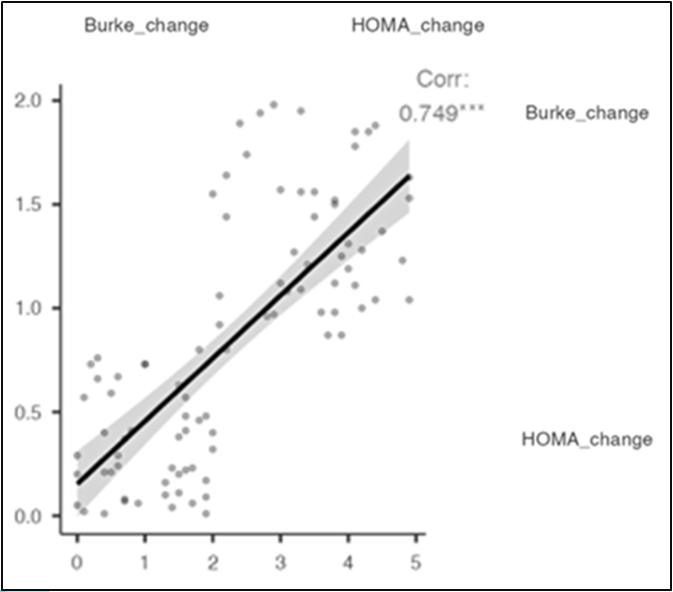
Background: Acanthosis nigricans (AN) is a well-known skin condition characterized by the development of hyperpigmented skin patches associated with abnormal texture and is closely related to metabolic syndromes characterized by insulin resistance. Chromium picolinate supplementation, especially, is suggested to improve insulin function in peripheral tissue by stimulating the insulin receptors. Which might ultimately improve the severity of acanthosis nigricans. There is not enough evidence to support the significance of this correlation. Objective: To determine the efficacy of chromium picolinate in reducing the clinical severity of acanthosis nigricans and improving insulin resistance in Iraqi adolescents and report any adverse effects. Methods: 95 adolescent patients with insulin resistance and acanthosis nigricans were randomly allocated into two groups in a 1:1 ratio. Group I (n=48) received chromium supplementation for 24 weeks, while Group II (n=47) received identical placebo capsules for the same duration. Changes in the baseline insulin resistance status and Acanthosis Nigricans severity were then recorded during follow-up visits at 8, 16, and 24 weeks. Results: Chromium supplementation significantly reduced Burke scores from baseline (mean 8.96±2.00) to 24 weeks (5.45±2.14) compared to placebo (9.04±1.92 to 8.00±1.88. HOMA-IR decreased markedly in the chromium group (4.10±0.92 to 2.75±0.89) versus placebo (3.96±0.84 to 3.62±0.85). Changes in HOMA-IR and Burke scores were strongly correlated (r=0.749, p<0.001). Conclusions: Chromium supplementation effectively improves insulin resistance and acanthosis nigricans severity in at-risk adolescents, supporting its use as a safe adjunctive therapy for metabolic dysfunction.
Downloads
References
Hughes EK, Brady MF and Rawla P, (Eds.), Acanthosis Nigricans. StatPearls. Treasure Island (FL): StatPearls Publishing Copyright © 2025, StatPearls Publishing LLC., 2025.
Das S, Sett A, Saha A, Patra S and Gharami RCH. Clinico-demographic study of patients with acanthosis nigricans- A menace for cardiovascular disease. Asian J Pharm Clin Res. 2023;16:26-30. doi: 10.22159/ajpcr.2023.v16i12.47987. DOI: https://doi.org/10.22159/ajpcr.2023.v16i12.47987
Freeman AM, Acevedo LA, Pennings N, (Eds.), Insulin Resistance. StatPearls. Treasure Island (FL): StatPearls Publishing LLC., 2025. Copyright © 2025.
Shiana, Parmar S, Guleria P, Jindal S, Ashawat MS, Kumar P. A comprehensive review of acanthosis nigricans: Pathogenesis, clinical manifestation and management. Recent Adv Inflamm Allergy Drug Discov. 2025;19:135-45. doi: 10.2174/0127722708314530240919054410. DOI: https://doi.org/10.2174/0127722708314530240919054410
Liu Z, Cao W. Malignant acanthosis nigricans with oral manifestations in a young female: A case report and literature review. Front Oncol. 2024;14:2024. doi: 10.3389/fonc.2024.1459148. DOI: https://doi.org/10.3389/fonc.2024.1459148
Svoboda SA, Shields BE. Cutaneous manifestations of nutritional excess: Pathophysiologic effects of hyperglycemia and hyperinsulinemia on the skin. Cutis. 2021;107:74-78. doi: 10.12788/cutis.0173. DOI: https://doi.org/10.12788/cutis.0173
WHO. Infertility [Internet]. [cited 2023 Feb 3]. Available from: https://www.who.int/health-topics/infertility#tab=tab_1.
Brickman WJ, Binns HJ, Jovanovic BD, Kolesky S, Mancini AJ, Metzger BE. Acanthosis nigricans: a common finding in overweight youth. Pediatr Dermatol. 2007;24:601-606. doi: 10.1111/j.1525-1470.2007.00547.x. DOI: https://doi.org/10.1111/j.1525-1470.2007.00547.x
Alkhalidi F. A comparative study to assess the use of chromium in type 2 diabetes mellitus. J Med Life. 2023;16:1178-1182. doi: 10.25122/jml-2023-0081. DOI: https://doi.org/10.25122/jml-2023-0081
Argano C, Mirarchi L, Amodeo S, Orlando V, Torres A, Corrao S. The role of vitamin D and its molecular bases in insulin resistance, diabetes, metabolic syndrome, and cardiovascular disease: State of the art. Int J Mol Sci. 2023;24:20231023. doi: 10.3390/ijms242015485. DOI: https://doi.org/10.20944/preprints202309.0595.v1
Herman R, Kravos NA, Jensterle M, Janež A, Dolžan V. Metformin and insulin resistance: A review of the underlying mechanisms behind changes in GLUT4-mediated glucose transport. Int J Mol Sci. 2022;23:20220123. doi: 10.3390/ijms23031264. DOI: https://doi.org/10.3390/ijms23031264
Fatahi M, Aghajani S, Javaheri H, Toqroljerdi M. The effect of chromium supplements on insulin resistance: A systematic review and meta-analysis of randomized controlled trials. J Health Med Sci. 2025;8:13-42. doi: 10.31014/aior.1994.08.04.245. DOI: https://doi.org/10.31014/aior.1994.08.04.245
Vajdi M, Khajeh M, Safaei E, Moeinolsadat S, Mousavi S, Seyedhosseini-Ghaheh H, et al. Effects of chromium supplementation on body composition in patients with type 2 diabetes: A dose-response systematic review and meta-analysis of randomized controlled trials. J Trace Elem Med Biol. 2024;81:127338. doi: 10.1016/j.jtemb.2023.127338. DOI: https://doi.org/10.1016/j.jtemb.2023.127338
Food and Drug Administration, HHS. Food Labeling: Revision of the Nutrition and Supplement Facts Labels. Final rule. Fed Regist. 2016;81(103):33741-999.
Henriksen C, Bügel S. Chromium - a scoping review for Nordic Nutrition Recommendations 2023. Food Nutr Res. 2023;67:20231206. doi: 10.29219/fnr.v67.10325. DOI: https://doi.org/10.29219/fnr.v67.10325
Choudhary SV, Saoji V, Singh A, Mane S. Acanthosis nigricans: a clinical marker of insulin resistance. Int J Res Dermatol. 2017;3:161-167. doi: 10.18203/issn.2455-4529.IntJResDermatol20171497. DOI: https://doi.org/10.18203/issn.2455-4529.IntJResDermatol20171497
Burke JP, Hale DE, Hazuda HP, Stern MP. A quantitative scale of acanthosis nigricans. Diabetes Care. 1999;22:1655-1659. doi: 10.2337/diacare.22.10.1655. DOI: https://doi.org/10.2337/diacare.22.10.1655
Diniz M, Beleigoli AMR, Schmidt MI, Duncan BB, Ribeiro ALP, Vidigal PG, et al. Homeostasis model assessment of insulin resistance (HOMA-IR) and metabolic syndrome at baseline of a multicentric Brazilian cohort: ELSA-Brasil study. Cad Saude Publica. 2020;36:e00072120. doi: 10.1590/0102-311x00072120. DOI: https://doi.org/10.1590/0102-311x00072120
Zhong B. How to calculate sample size in randomized controlled trial? J Thorac Dis. 2009;1:51-54. PMID: 22263004.
Talab AT, Abdollahzad H, Nachvak SM, Pasdar Y, Eghtesadi S, Izadi A, et al. Effects of chromium picolinate supplementation on cardiometabolic biomarkers in patients with type 2 diabetes mellitus: A randomized clinical trial. Clin Nutr Res. 2020;9:97-106. doi: 10.7762/cnr.2020.9.2.97. DOI: https://doi.org/10.7762/cnr.2020.9.2.97
Chen WY, Chen CJ, Liu CH, Mao FC. Chromium supplementation enhances insulin signalling in skeletal muscle of obese KK/HlJ diabetic mice. Diabetes Obes Metab. 2009;11:293-303. doi: 10.1111/j.1463-1326.2008.00936.x. DOI: https://doi.org/10.1111/j.1463-1326.2008.00936.x
Hua Y, Clark S, Ren J, Sreejayan N. Molecular mechanisms of chromium in alleviating insulin resistance. J Nutr Biochem. 2012;23:313-9. doi: 10.1016/j.jnutbio.2011.11.001. DOI: https://doi.org/10.1016/j.jnutbio.2011.11.001
Nakatani Y, Kaneto H, Kawamori D, Yoshiuchi K, Hatazaki M, Matsuoka TA, et al. Involvement of endoplasmic reticulum stress in insulin resistance and diabetes. J Biol Chem. 2005;280:847-851. doi: 10.1074/jbc.M411860200. DOI: https://doi.org/10.1074/jbc.M411860200
Asbaghi O, Fatemeh N, Mahnaz RK, Ehsan G, Elham E, Behzad N, et al. Effects of chromium supplementation on glycemic control in patients with type 2 diabetes: a systematic review and meta-analysis of randomized controlled trials. Pharmacol Res. 2020;161:105098. doi: 10.1016/j.phrs.2020.105098. DOI: https://doi.org/10.1016/j.phrs.2020.105098
Aghdassi E, Arendt BM, Salit IE, Mohammed SS, Jalali P, Bondar H, et al. In patients with HIV-infection, chromium supplementation improves insulin resistance and other metabolic abnormalities: a randomized, double-blind, placebo controlled trial. Curr HIV Res. 2010;8:113-120. doi: 10.2174/157016210790442687. DOI: https://doi.org/10.2174/157016210790442687
Ashoush S, Abou-Gamrah A, Bayoumy H, Othman N. Chromium picolinate reduces insulin resistance in polycystic ovary syndrome: Randomized controlled trial. J Obstet Gynaecol Res. 2016;42:279-285. doi: 10.1111/jog.12907. DOI: https://doi.org/10.1111/jog.12907
Patel NU, Roach C, Alinia H, Huang WW, Feldman SR. Current treatment options for acanthosis nigricans. Clin Cosmet Investig Dermatol. 2018;11:407-413. doi: 10.2147/ccid.S137527. DOI: https://doi.org/10.2147/CCID.S137527
Nithun TM, Ranugha PSS, Betkerur JB, Shastry V. Association of acanthosis nigricans and insulin resistance in Indian children and youth - A HOMA2-IR based cross-sectional study. Indian Dermatol Online J. 2019;10:272-278. doi: 10.4103/idoj.IDOJ_303_18. DOI: https://doi.org/10.4103/idoj.IDOJ_303_18
Downloads
Published
How to Cite
Issue
Section
License
Copyright (c) 2026 Al-Rafidain Journal of Medical Sciences ( ISSN 2789-3219 )

This work is licensed under a Creative Commons Attribution-NonCommercial-ShareAlike 4.0 International License.
Published by Al-Rafidain University College. This is an open access journal issued under the CC BY-NC-SA 4.0 license (https://creativecommons.org/licenses/by-nc-sa/4.0/).