Game-Based versus Circuit Training: Impacts on Aerobic Capacity (VO₂max) and Cardiovascular Health Outcomes
DOI:
https://doi.org/10.54133/ajms.v10i2.2819Keywords:
Circuit preparing strategy, Play preparing strategy , Students , VO2maxAbstract
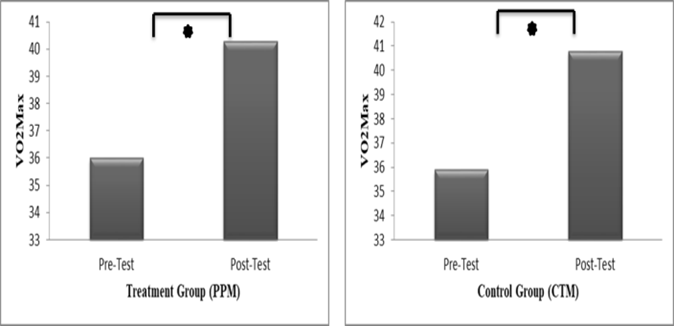
Background: Several training models to increase VO₂max capacity have been discussed in previous studies. However, there is a scarcity of research on student engagement to improve outcomes. Objectives: To assess the extent to which training and circuit training methods improve students' VO₂max capacity. Methods: This study involved 34 students in a comparison/control group and used a two-group pretest-post-test design in a quasi-experimental study. The control group received circuit training, while the experimental group received the play training method. The process was three stages: pretest, therapy, and post-test. Initial data were collected for the pretest, and then there was a 16-session treatment phase, followed by a post-test phase. A multistage fitness test (bleep test) generated VO₂max capacity data. Results: The average pre-test score was 36.0±5.2, the average post-test score was 40.3±4.3, and the percentage increase was 11.9% in the "Enough" category. The experimental group had a significant impact on increasing VO₂max capacity (p<0.05). The control group also significantly increased VO₂max capacity (p<0.05). With an average pre-test score of 35.9±5.3 and an average post-test score of 40.8±5.2 and a percentage increase of 13.6% in the "enough" category. Therefore, the circuit training method provides a greater increase in VO₂max capacity. Conclusions: The play-training method and the circuit-training method have been proven to have a positive effect on increasing VO₂max capacity. This research is important for instructors, coaches, and PJOK teachers to be able to apply this training method in increasing VO₂max capacity.
Downloads
References
Loviani SD, Saputra YM, Kusmaedi N, Ray HRD, Nur L. Effects of health-related fitness model to improve physical fitness and physical activity in vocational high school students. Int J Hum Movement Sports Sci. 2021;9(4):654–660. doi: 10.13189/saj.2021.090408. DOI: https://doi.org/10.13189/saj.2021.090408
Apriyano B, Zainuddin ZA, Hashim AHM, Sayyd SM, Mazlan AN. (2023). Physical fitness levels of junior high school students in different regions: Highlands, lowlands, and islands. J Physical Educ Sport. 2023;23(12):3378–3384.
Kaur H, Singh T, Arya YK, Mittal S. (2020). Physical fitness and exercise during the COVID-19 pandemic: A qualitative enquiry. Front Psychol. 2020;11:590172. doi: 10.3389/fpsyg.2020.590172. DOI: https://doi.org/10.3389/fpsyg.2020.590172
Khoramipour K, Basereh A, Hekmatikar AA, Castell L, Ruhee RT, Suzuki K. Physical activity and nutrition guidelines to help with the fight against COVID-19. J Sports Sci. 2021;39(1):101-107. doi: 10.1080/02640414.2020.1807089. DOI: https://doi.org/10.1080/02640414.2020.1807089
Vilafranca Cartagena M, Tort-Nasarre G, Rubinat Arnaldo E. Barriers and facilitators for physical activity in adults with type 2 diabetes mellitus: A scoping review. Int J Environ Res Public Health. 2021;18(10):5359. doi: 10.3390/ijerph18105359. DOI: https://doi.org/10.3390/ijerph18105359
Hammami A, Harrabi B, Mohr M, Krustrup P. Physical activity and coronavirus disease 2019 (COVID-19): specific recommendations for home-based physical training. Manag Sport Leisure. 2022;27(1–2):26–31. doi: 10.1080/23750472.2020.1757494. DOI: https://doi.org/10.1080/23750472.2020.1757494
Kour Buttar K, Saboo N, Kacker S. A review: Maximal oxygen uptake (VO2 max) and its estimation methods. Int J Physical Educ Sports Health. 2019;6(6):24–32.
Bragada JA, Bartolomeu RF, Rodrigues PM, Magalhães PM, Bragada JP, Morais JE. Validation of StepTest4all for assessing cardiovascular capacity in young adults. Int J Environ Res Public Health. 2022;19(18):11274. doi: 10.3390/ijerph191811274. DOI: https://doi.org/10.3390/ijerph191811274
9.Haryanto AI, Kadir S, Suardika IK, Muktiani NR. Analysis of maximal volume of oxygen for Gorontalo contingent martial arts athletes. J Physical Educ Sport Health Recreat. 2024;13(2):373-377. doi: 10.15294/peshr.v13i2.7561. DOI: https://doi.org/10.15294/peshr.v13i2.7561
Festiawan R, Hoi LB, Siswantoyo N, Kusuma IJ, Heza FN, Wahono BS, et al. High-intensity interval training, fartlek training & oregon circuit training: what are the best exercises to increase vo2 max. Ann Tropic Med Pub Health. 2021;24(03):0–10. doi: 10.36295/ASRO.2021.24363. DOI: https://doi.org/10.36295/ASRO.2021.24363
Rana A, Bandyopadhaya S. Relationship of cardiovascular fitness with physiological fitness components. J Sci Healthcare Explor. 2020;2(6):6-8.
Samaja M, Ottolenghi S. The oxygen cascade from atmosphere to mitochondria as a tool to understand the (Mal)adaptation to hypoxia. Int J Mol Sci. 2023;24(4):3670. doi: 10.3390/ijms24043670. DOI: https://doi.org/10.3390/ijms24043670
Aksović N, Bjelica B, Joksimović M, Skrypchenko I, Filipović S, Milanović F. et al. Effects of aerobic physical activity to cardio-respiratory fitness of the elderly population: systematic overview. Pedagogy Physical Culture Sports. 2020;24(5):208–218. doi: 10.15561/26649837.2020.0501. DOI: https://doi.org/10.15561/26649837.2020.0501
Asbupel F, Kiram Y, Neldi H. (2020). The effect of playing training method and circuit training method towards VO2 max capacity on Badminton male athlete at G-sport center Padang. Adv Soc Sci Hum Educ Res Sympo (PSSHERS 2019). 2020;829–834. doi: 10.2991/assehr.k.200824.185. DOI: https://doi.org/10.2991/assehr.k.200824.185
Holbrey CE. Kahoot! Using a game-based approach to blended learning to support effective learning environments and student engagement in traditional lecture theatres. Technol Pedagogy Educ. 2020;29(2):191–202. doi: 10.1080/1475939X.2020.1737568. DOI: https://doi.org/10.1080/1475939X.2020.1737568
Dania A, Harvey S. Teaching basketball to sampling-year athletes: A game-centered and situated learning perspective. J Physical Educ Sport. 2020;20(2):529–538. doi: 10.7752/jpes.2020.02079. DOI: https://doi.org/10.7752/jpes.2020.02079
Oliveira-Junior SA, Boullosa D, Mendonça MLM, Vieira LFC, Mattos WW, Amaral BOC, et al. Effects of circuit weight-interval training on physical fitness, cardiac autonomic control, and quality of life in sedentary workers. Int J Environ Res Public Health. 2021;18(9):4606. doi: 10.3390/ijerph18094606. DOI: https://doi.org/10.3390/ijerph18094606
Annasai F, Sumaryanti, Nugroho S, Hartanto A, Arianto AC. Circuit training based physical condition training model to increase speed, agility, arm power, and limb muscle power of basketball athletes. Pedagogy Physical Culture Sports. 2023;27(4):282-288. doi: 10.15561/26649837.2023.0403. DOI: https://doi.org/10.15561/26649837.2023.0403
Yudhistira D, Suherman WS, Wiratama A, Wijaya UK, Paryadi P, Faruk M, et al. Content validity of the HIIT training program in special preparations to improve the dominant biomotor components of Kumite athletes. Int J Hum Movement Sport Sci. 2021;9(5):1051–1057. doi: 10.13189/saj.2021.0905220. DOI: https://doi.org/10.13189/saj.2021.090527
Montgomery DC. Design and analysis of experiments. In: Ratts L, Buonocore L, Melhorn A, Ruel C, Nolan H, Eide M, (Eds.), Design (8th ed., Vol. 2). John Wiley & Sons, Inc; 2013.7.
Frey BB. Paired-Samples t-test. There’s a stat for that!: What to do & when to do it; 202; 46–47. doi: 10.4135/9781071909775.n18. DOI: https://doi.org/10.4135/9781071909775.n18
Nugroho S, Nasrulloh A, Karyono TH, Dwihandaka R, Pratama KW. Effect of intensity and interval levels of trapping circuit training on the physical condition of badminton players. J Physical Educ Sport. 2021;21:1981–1987. doi: 10.7752/jpes.2021.s3252. DOI: https://doi.org/10.7752/jpes.2021.s3252
Komaini A, Gusril, Andika H, Effendi R, Ilham, Sumantri A, et al. Motivation and play activities for children’s basic movements. Retos. 2024;57:258–263. doi: 10.47197/retos.v57.107149. DOI: https://doi.org/10.47197/retos.v57.107149
Yuliandra R, Nugroho RA, Gumantan A. The effect of circuit training method on leg muscle explosive power. J Physical Educ. 2020;9(3):157–161. doi: 10.5281/zenodo.3382159.
Lumintuarso R, Suharjana W, Ndayisenga J. Sports management of indonesian sports athletics preparations in Asian games 2018. Int J Hum Movement Sport Sci. 2021;9(1):56–61. doi: 10.13189/saj.2021.090108. DOI: https://doi.org/10.13189/saj.2021.090108
Norris E, van Steen T, Direito A, Stamatakis E. Physically active lessons in schools and their impact on physical activity, educational, health and cognition outcomes: a systematic review and meta-analysis. Br J Sports Med. 2020;54(14):826–838. doi: 10.1136/bjsports-2018-100502. DOI: https://doi.org/10.1136/bjsports-2018-100502
Clemente-Suárez VJ, Beltrán-Velasco AI, Ramos-Campo DJ, Mielgo-Ayuso J, Nikolaidis PA, Belando N, et al. Physical activity and COVID-19. The basis for an efficient intervention in times of COVID-19 pandemic. Physiol Behav. 2022;244:113667. doi: 10.1016/j.physbeh.2021.113667. DOI: https://doi.org/10.1016/j.physbeh.2021.113667
Mateo-Orcajada A, González-Gálvez N, Abenza-Cano L, Vaquero-Cristóbal R. Differences in physical fitness and body composition between active and sedentary adolescents: A systematic review and meta-analysis. J Youth Adolesc. 2022;51(2):177-192. doi: 10.1007/s10964-021-01552-7. DOI: https://doi.org/10.1007/s10964-021-01552-7
Chang CY, Hwang GJ, Gau ML. Promoting students’ learning achievement and self-efficacy: A mobile chatbot approach for nursing training. Br J Educ Technol. 2022;53(1):171–188. doi: 10.1111/bjet.13158. DOI: https://doi.org/10.1111/bjet.13158
Arufe-Giráldez V, Sanmiguel-Rodriguez A, Ramos-Álvarez O, Navarro-Patón R. Gamification in physical education: A systematic review. Educ Sci. 2022;12(8):540. doi: 10.3390/educsci12080540. DOI: https://doi.org/10.3390/educsci12080540
Santos IKD, Medeiros RCDSC, Medeiros JA, Almeida-Neto PF, Sena DCS, Cobucci RN, et al. Active video games for improving mental health and physical fitness-An alternative for children and adolescents during social isolation: An overview. Int J Environ Res Public Health. 2021;18(4):1641. doi: 10.3390/ijerph18041641. DOI: https://doi.org/10.3390/ijerph18041641
Listyarini AE, Alim A, Oktaviani AD, Putro KH, Kristiyanto A, Margono A, et al. The relations of using digital media and physical activity with the physical fitness of 4th and 5th grade primary school students. Physical Educ Theory Methodol. 2021;21(3):281–287. doi: 10.17309/tmfv.2021.3.12. DOI: https://doi.org/10.17309/tmfv.2021.3.12
Downloads
Published
How to Cite
Issue
Section
License
Copyright (c) 2026 Al-Rafidain Journal of Medical Sciences ( ISSN 2789-3219 )

This work is licensed under a Creative Commons Attribution-NonCommercial-ShareAlike 4.0 International License.
Published by Al-Rafidain University College. This is an open access journal issued under the CC BY-NC-SA 4.0 license (https://creativecommons.org/licenses/by-nc-sa/4.0/).